
Drain Cleaning in Fate, TX
Fate growth brings new homes onto ground that still moves. When drains slow or back up, we diagnose on camera and fix the line, not the symptom.
Yes, we provide drain cleaning in Fate, TX for new growth homes across town, where fresh subdivisions sit on ground that still moves and young landscaping is already testing the sewer lines. We are a drain and sewer crew only, and we work Fate with the camera ready, because a new home with a slow drain usually has a specific, findable cause, and finding it beats clearing the same clog twice. If one fixture is slow, we clear it and check the rest of the house. If several fixtures slow together, we treat it as a main line problem and look inside before recommending anything bigger.
Fate growth and ground
Fate is a growth town, and growth towns produce a drain story that surprises homeowners. The subdivisions are new, the streets are new, the homes are new, and the expectation is that nothing underground should be wrong yet. Then a kitchen sink drains slowly, a bathroom gurgles when the laundry runs, or a main line backs up during a busy weekend, and the homeowner is left wondering how a new home can already have a sewer problem. The answer is the ground underneath the new streets, which is older than any home on it and moves on its own schedule.
The soil around Fate is expansive clay. It swells when it gets wet and shrinks when it dries, and it repeats that cycle every year regardless of how recently the home above it was built. A sewer lateral installed in that clay starts experiencing joint movement from its first wet and dry seasons. A joint that was tight at construction can open a fraction over a few cycles, and that fraction is enough for a root to enter and enough for paper and grease to catch. The home does not need to be old for the ground to start working on its line. It only needs a few seasons.

Young landscaping and builder-era laterals
Young landscaping speeds the story up rather than slowing it down. New subdivisions in Fate are planted with young trees and shrubs that send roots out searching for water from their first year in the ground. A sewer joint with even a hairline gap is a steady water source, and roots find it while the tree is still small enough that nobody thinks of it as a root problem yet. By the time the tree looks mature, the root mat inside the line may already be thick. That is why we do not dismiss a root conversation in a new Fate neighborhood on the grounds that the trees are young. Young roots are still roots, and they are already in the ground doing what roots do.
Builder-era laterals are the third piece of the Fate pattern. A lateral installed during a fast build phase can carry small defects that do not show up on move-in day and do not show up on a walkthrough, because they are underground. A joint that was never quite seated, bedding that settles unevenly after backfill, a low spot that becomes a belly once the ground consolidates: all of these sit quietly until the house starts using water at full family volume. Then they show up as a drain that slows in the same place, a clog that returns after a clearing, or a line that handles quiet days fine and backs up when everyone is home and using water at once.
Drain cleaning in Fate
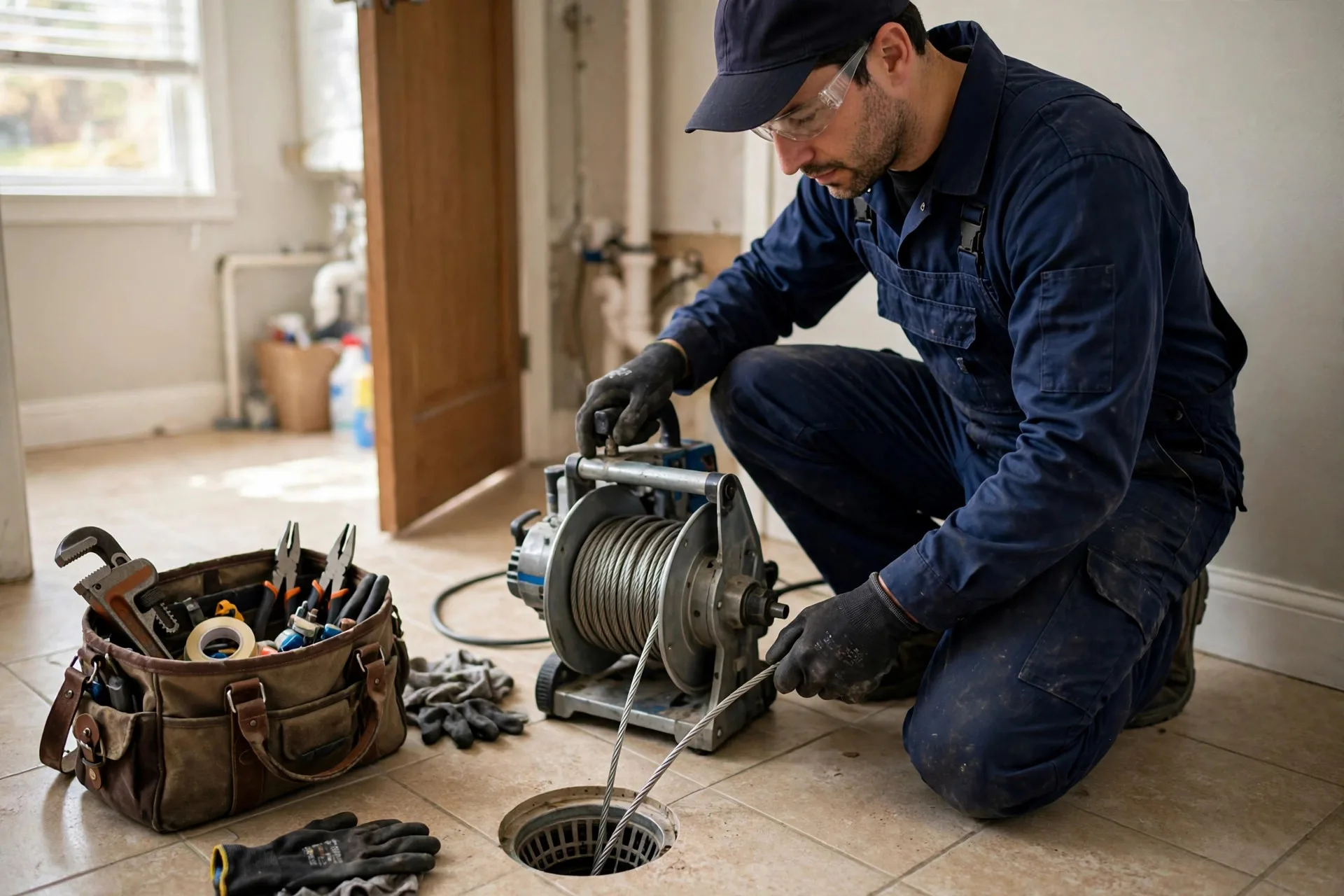
Drain cleaning in Fate starts with sorting the pattern, because the pattern decides the tool. A single slow sink or tub is usually a local problem near that fixture: hair and soap scum in a bathroom run, or grease that has cooled and coated the wall of a kitchen run. Those clearings are straightforward, and we keep them that way. We use the right size cable for the line, we run water through the fixture afterward, and we check the fixtures downstream to make sure the clearing held across the house.
Several slow fixtures together mean a main line problem, and that is the pattern where a basic clearing can mislead a Fate homeowner. A cable cuts a channel through a root mat or a grease coat, water starts moving again, and the visit looks successful. Months later the mat grows back across the channel, the grease recoats the wall, or the belly refills with standing water, and the same drain clogs again. In a new home that cycle feels especially unfair, because the homeowner reasonably expected a new line to stay clear. The cycle is not a sign the home was built badly in some dramatic way. It is a sign the line has a specific defect or coating that a channel cut cannot remove.
Clear, then look inside
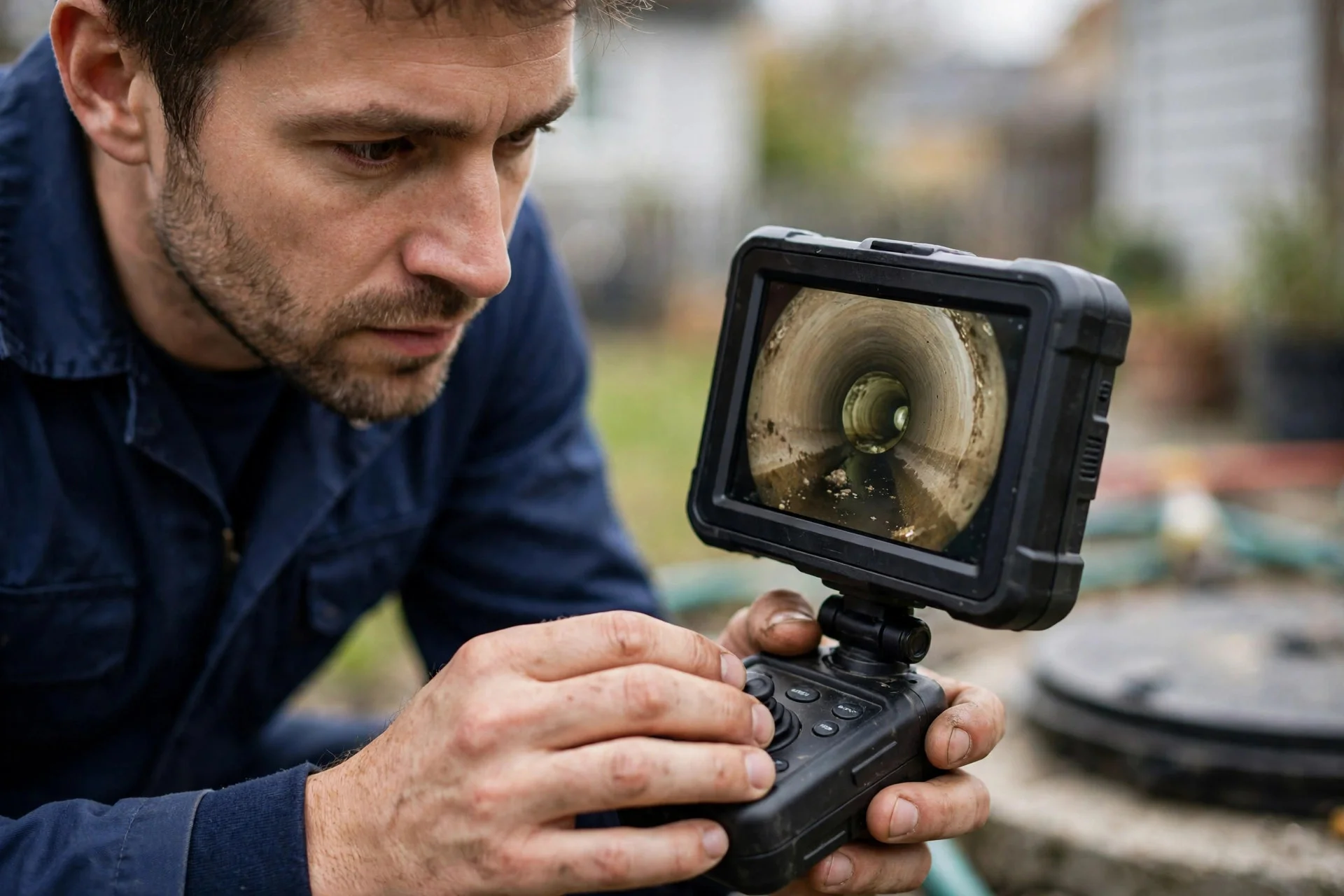
Our routine on a Fate main line call is to clear the line first so the house can use water again, then run the sewer camera inspection while the line is open and show you the footage on screen. Roots appear as fine hairs growing through a joint. Grease appears as a thick, uneven coating narrowing the pipe. A belly appears as standing water that never drains away. An offset joint appears as a step where one section dropped below the next. Each picture points to a different fix, and we explain that fix from the footage rather than from a script. You decide with the same facts we have, which is the only honest way to sell a repair in a new home.
After a clearing we run every fixture on the affected line and watch how each one drains. If one fixture still lags, there is a second blockage downstream or the first one was only partly cleared. If everything drains but the line still gurgles, air is trapped behind a partial blockage the cable passed. A drain that is truly clear drains quietly across the whole house, and we do not pack up until we have seen that. That full-house check catches the second problem that a single-fixture test would miss, and in a new home it is often the check that finds the build-phase defect hiding behind the first clog.
When the camera shows a coated wall rather than a break, hydro jetting scours it clean.
New-home drain problems: construction debris, bad joints, early root mats
New homes have their own drain problems, and they deserve their own explanation, because a Fate homeowner with a new home is often told that a slow drain must be user error. Sometimes it is grease or misuse, and we say so when it is. Often it is one of three build-phase problems, and none of them is the homeowner's fault.
Construction debris is the first. During construction, a lateral can collect material that was never meant to be in a sewer line: grout wash, drywall dust, small offcuts, or backfill that entered through an open end before the line was capped. That material settles in a low spot or catches at a joint, narrows the line, and then collects paper and grease on top of itself. The drain works fine at first, because the narrowing is partial, and then it slows as the buildup grows. A cable can punch through that buildup, but the debris at the bottom of the pipe stays and the clog returns. Jetting and camera work together here: the camera finds the debris field, and the right hydro jetting pass removes it rather than channeling through it.
Bad joints and early root mats
Bad joints are the second. A joint that was not fully seated during installation, or that shifted as the trench bedding settled, leaves a gap or a step inside the pipe. Water still flows through it, so the defect is invisible from inside the house, but paper catches on the step and roots enter through the gap. The drain slows in that one place, again and again, while every other fixture drains normally until the main line is involved. The camera locates a bad joint by distance from the cleanout, which turns a vague new-home complaint into a precise repair location. That precision matters, because a builder conversation or a sewer line repair plan both go better with footage and a distance measurement than with a description of a slow drain.
Early root mats are the third, and they are the most underestimated problem in a new subdivision. A young tree does not need to be large to send roots into a sewer joint, and a new yard full of young trees puts many root systems near the lateral at once. The first root hairs are thin and the first mat is small, so the drain slows only slightly at first. Over seasons the mat thickens, catches more debris, and becomes the recurring clog the homeowner cannot explain. Catching an early mat with a camera, and cleaning it thoroughly before it thickens, is a simpler visit than dealing with a mature mat years later. We tell Fate homeowners this plainly: young trees are not a reason to skip a camera look. They are a reason to get one.
Camera-first approach
A sewer camera inspection is the tool that turns a new-home drain complaint into evidence, and in Fate we put it at the center of any repeat clog or main line problem. The camera head travels through the cleanout and shows the inside of the pipe on a monitor, live, while we are still at your house. We show you that footage as we go and explain each picture in plain language. A sound pipe looks like a clean, open bore with water moving through it. A root mat looks like hair growing through a joint. Debris looks like material sitting in the bottom of the pipe. A bad joint looks like a step or a gap. A belly looks like standing water that never drains away.
Camera-first matters most in a new home because the stakes of a guess are higher. Without footage, a crew can guess that a new line only needs a clearing when it actually has a bad joint that will keep clogging, and the homeowner pays for several clearings before anyone looks inside. Or a crew can guess that a new line needs a major repair when it only has a debris field that a thorough cleaning would remove, and the homeowner pays for work the line never needed. Footage removes both errors. It shows whether the line is sound, coated, blocked by debris, or defective at a joint, and the fix follows the picture.
The record and the timing
The camera also creates a record that protects a Fate homeowner over time. If the same drain slows again next year, new footage can be compared against the old to see whether the problem is the same defect returning, a mat regrowing, or a new problem forming elsewhere. That history turns drain work from a series of isolated visits into a story about one line, and a story is how you stop paying for the same guess twice. We recommend a camera inspection for any Fate drain that has clogged more than once, any main line backup, any gurgling pattern across fixtures, and any new home where the cause of a slow drain is not obvious from the fixture pattern alone.
The last point about camera work in Fate is about timing. The earlier the camera goes in, the simpler the fix usually is. A debris field found early is a cleaning. A bad joint found early is a spot repair at a known location. An early root mat found early is a thorough cleaning before the mat thickens and damages the joint further. Waiting until the line backs up does not make any of those problems smaller. It makes the visit messier and the conversation harder. Calling at the gurgling stage, when a toilet bubbles as the washer drains or a sink bubbles as the tub empties, is the cheapest moment to get evidence, and we say so because it is true, not because it fills a schedule.
The same camera first rule covers Rowlett and Wylie, and the Fate questions we hear most are answered on the FAQs page.
Why would a brand new home in Fate already have a drain problem?
Because the ground and the build phase can both affect a line before the home has aged at all. Expansive clay moves from the first wet and dry seasons, opening joints a fraction at a time. Young trees send roots toward those joints while they are still small. And a lateral installed during a fast build can carry a poorly seated joint, uneven bedding, or construction debris that only shows up once the house uses water at full volume. None of that means the home is falling apart. It means the line has a specific, findable cause, and the camera is how you find it.
What is construction debris doing in a new sewer line?
Material from the build can enter a lateral before it is capped, or settle into a low spot during backfill: grout wash, dust, small offcuts, or backfill itself. That material narrows the line and then collects paper and grease on top of it, so the drain works at first and slows over time. A cable punches a channel through the buildup and leaves the debris in place, which is why the clog returns. A camera inspection locates the debris field, and a thorough cleaning removes it instead of channeling through it.
Are young trees really a root problem already?
Yes, they can be. A young tree sends roots out looking for water from its first year in the ground, and a sewer joint with even a hairline gap is a reliable water source. The first root hairs are thin, so the drain slows only slightly at first, and the mat thickens over seasons as it catches paper and grease. That slow build is why a Fate drain can seem fine for a year and then start clogging regularly. A camera look finds an early mat while it is still a cleaning job, rather than after it has thickened into a repair job.
Should I wait until a Fate drain backs up before calling?
No. A backup is the most expensive and messiest moment to learn what is wrong with a line. The earlier warning is gurgling: a toilet that bubbles when the washer drains, or a sink that bubbles when the tub empties, which means air is trapped behind a partial blockage. A camera inspection at the gurgling stage is a cleaner visit and usually a smaller fix. Calling early is not about filling a schedule. It is about catching a debris field, a bad joint, or an early root mat while the fix is still simple.
Related Services
One trade, seven services. Every service below is drain and sewer only.
Drain Cleaning
Snaking and clearing for sinks, tubs, toilets, and main lines, with the cause found, not guessed.
Learn more
Emergency Drain Service
Backups and sewage overflows answered fast, with a crew that shows up ready.
Learn more
Sewer Line Repair
Spot repairs and section fixes, located by camera first, so we open only what must be opened.
Learn more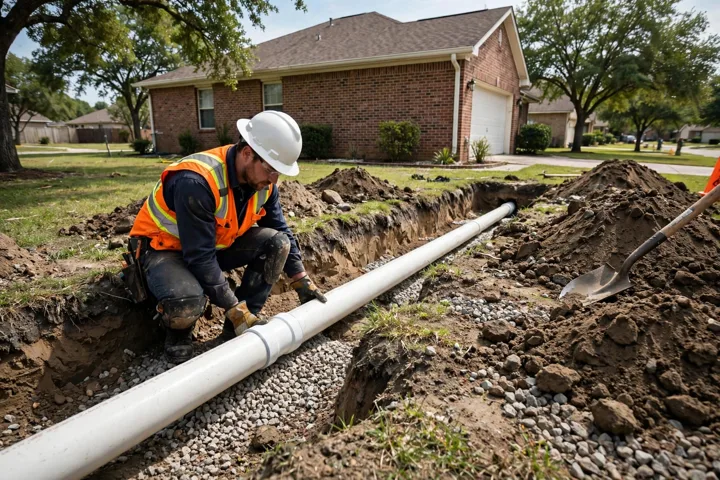
Sewer Line Replacement
Full line replacement in clay and cast iron country, bedded and graded to drain properly.
Learn more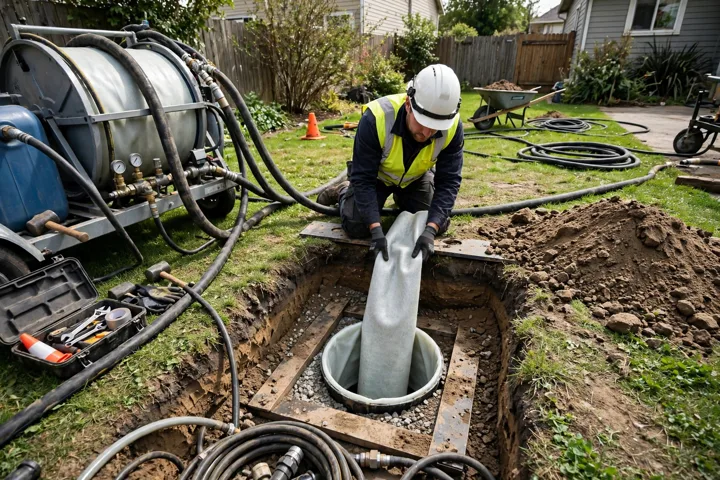
Trenchless Sewer Repair
Pipe lining and bursting that renew the line through small access points, not a torn up yard.
Learn more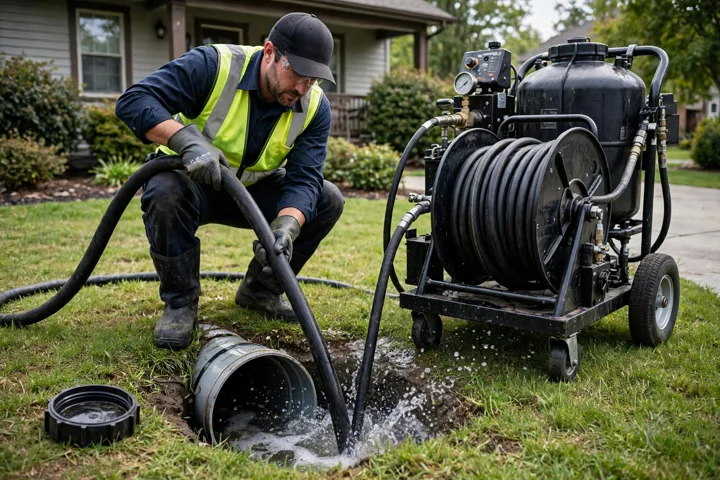
Hydro Jetting
High pressure water scouring that strips grease, scale, and roots back to a clean pipe wall.
Learn more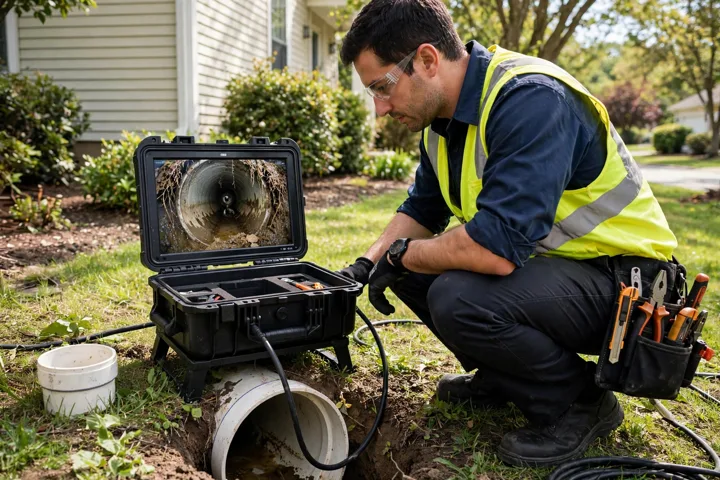
Sewer Camera Inspection
A recorded look inside the line: roots, cracks, bellies, and offsets, shown to you on screen.
Learn moreKeep Reading
Related pages worth opening next, with the ground detail that belongs to each one.
Royse City
Drain and sewer service for Royse City homes, from a crew that serves the Rockwall lake footprint.
Learn moreHeath
Drain and sewer service for Heath homes, from a crew that serves the Rockwall lake footprint.
Learn moreDrain and Sewer Cost Guide
What drives the price of drain cleaning, repair, replacement, trenchless, jetting, and camera work, no guesswork.
Learn moreAll Drain and Sewer Services
Seven services, one trade. Nothing else on the truck, nothing else on this site.
Learn moreRequest Service
Tell us what is happening and we will take it from there. We respond fast, and we show you the problem on camera before we quote the fix.