
Emergency Plumber in Rockwall, TX
A drain backup is not a general plumbing call. We are a drain and sewer crew, and emergencies are the work we answer first: stop the damage, find the cause on camera, and fix the line.
Request Service
Tell us what is happening. We respond fast, and we show you the problem on camera before we quote the fix.
An emergency plumber in Rockwall, TX for a drain backup is a drain and sewer crew that stops sewage from rising through your lowest fixtures, clears the blocked main line, and shows you on camera why it blocked. This page covers drain emergencies only. A backup, a main line that will not drain at all, and sewage coming up through a floor drain or a tub are emergencies. A single slow sink is not. If water is rising, stop running water, keep people away from standing sewage, note which fixtures backed up and in what order, and call a drain crew. The rest of this page explains how to tell the difference, what to do while you wait, and what a real fix looks like after the water is down.
When an emergency plumber in Rockwall, TX is the right call: triage, what counts and what can wait
At a glance
- Sewage up through any fixture: emergency, stop running water.
- Several fixtures slow or stopped at once: emergency, the main line is blocked.
- Water rising in a tub or shower when another fixture runs: emergency.
- Gurgling with normal draining: warning sign, schedule a camera visit soon.
- One slow fixture, everything else normal, no sewage: scheduled visit.
- A smell with no backup and no slow draining: schedule a visit and note where the smell is strongest.
A drain emergency is defined by what the water is doing, not by how worried you are, and a clear triage keeps a bad night from becoming a damaged house. Sewage backing up through any fixture counts. Water rising in a tub when a toilet flushes counts. A shower filling when the washer drains counts. A floor drain that starts to overflow when any other fixture runs counts. Every one of those signs means the main line is blocked and the house itself has become the low point of the system, so each additional gallon you send down a drain has nowhere to go except back up through the lowest opening.
A main line that drains nothing at all also counts, even before sewage appears. If every fixture in the house is slow at the same time, if toilets will not flush and sinks will not empty, and if the pattern started suddenly across the whole house, the blockage is downstream of all of them. Waiting on that pattern only lets pressure build behind the blockage and lets standing water sit longer in the line. A drain crew treats a whole house stoppage as an emergency because the cause is already past the point where a plunger or a small cable at one fixture can reach it.
Gurgling and what can wait: the warning most people miss
Gurgling sits in the middle, and it is the warning most people miss. A toilet that gurgles when the washer drains, or a sink that bubbles when a tub empties, is air trapped behind a partial blockage. That is not yet a backup, but it is the line announcing that a backup is coming. If you hear gurgling and you can still use water carefully, note which fixtures trigger it and call for a scheduled visit with the camera ready. If gurgling turns into slow draining across several fixtures, stop adding water and treat it as an emergency call.
What can wait is narrower than most people hope, and saying so plainly is part of the job. One slow sink while everything else drains normally is a fixture or branch problem. One slow tub, one slow toilet, one slow sink, each on its own, can usually wait for a scheduled visit, provided water is not rising and no sewage is involved. A drain that is slow but still emptying, with no backup and no smell of sewage in the house, is a problem worth fixing soon, but it is not the call that jumps the queue. The test is simple and it works every time: if the problem is in one fixture, it can usually wait; if the problem is in the whole house, or if sewage is coming back up, it cannot.
What to do right now: stop water, what not to do, what to note before calling
The first move in a backup is to stop adding water, and that move matters more than any tool you own. Do not run the washer. Do not run the dishwasher. Do not take a long shower. Do not keep flushing to test whether the line cleared, because each flush sends another tank of water toward a blockage that is already sending water back. Even a short shower adds gallons to a system that cannot discharge them, and those gallons will show up at the lowest drain in the house. Tell everyone in the house, in plain words, that the drains are off until the crew arrives. A backup gets worse one quiet load of laundry at a time, and the households that limit the damage are the ones that stop water early and keep it stopped.
Keep people and pets away from standing sewage water. Sewage is not gray water and it is not a nuisance puddle. It carries bacteria that do not belong on skin, on shoes, or on anything that will later touch a kitchen counter. Do not let children walk through it. Do not mop it toward another drain, because that drain connects to the same blocked line. If sewage has reached a floor, keep the room closed off if you can, and leave cleanup until the line is open and the water has somewhere to go. A crew that arrives to a contained backup can work faster than a crew that arrives to sewage spread across three rooms by well meaning mopping.
What not to do while you wait
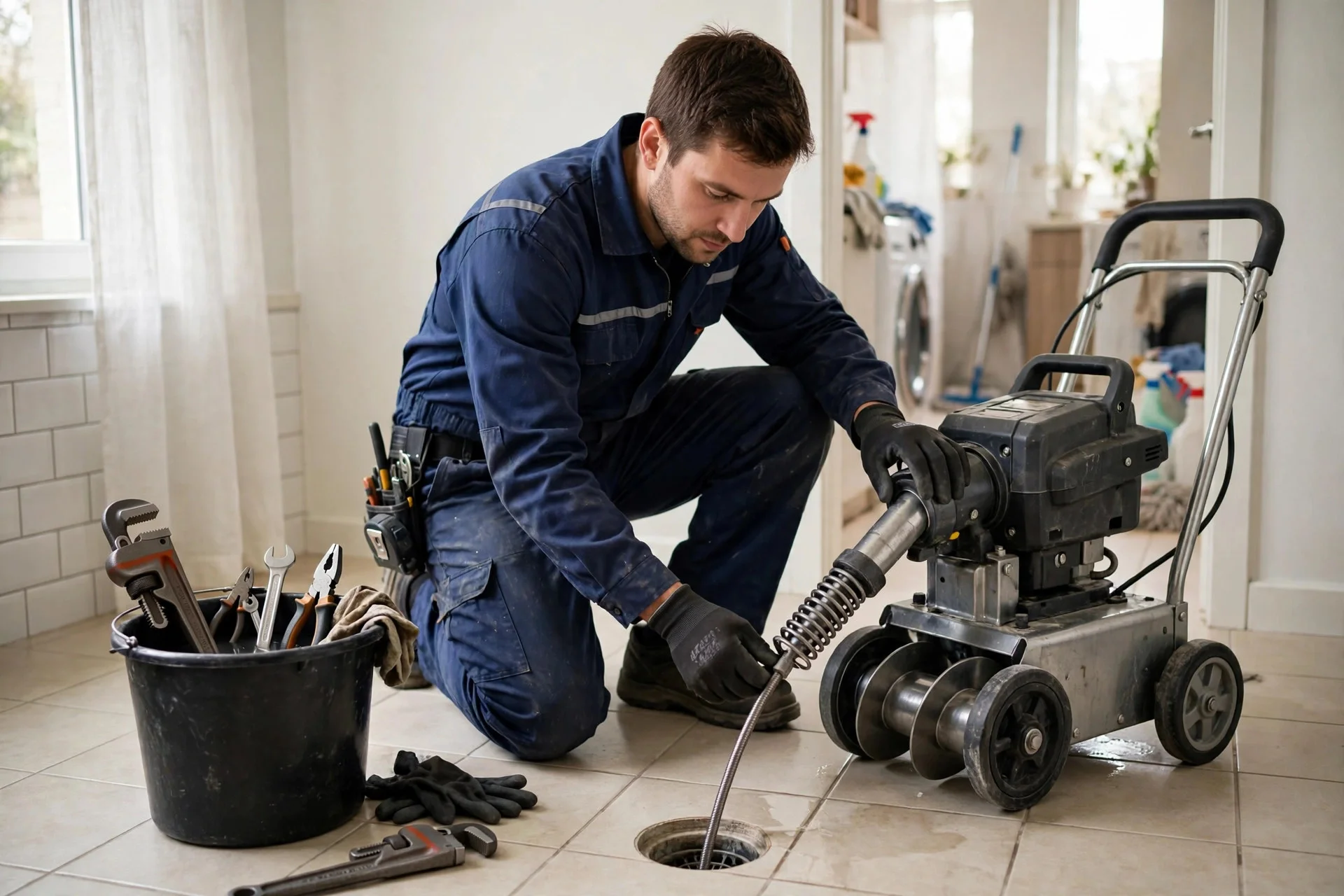
Do not pour chemical drain cleaner down a backed up line. Chemical cleaner rarely clears a main line blockage, and it turns the standing water the crew has to work in into a chemical hazard. Do not plunge a main line backup aggressively either. A plunger at one fixture pushes against a blockage that has nowhere to go, and the pressure often forces sewage up through a different fixture, sometimes a tub or a shower you had kept clean until then. Do not open a cleanout cap under pressure. A cleanout is a capped pipe near the house wall or in the yard, and opening one while the line is backed up can release sewage into the yard in a rush. Leave the cap alone and let the crew open it in a controlled way.
Before you call, note four things, because those four facts tell the crew more than a long description of the smell. Note which fixtures are affected, and whether the problem is one fixture or the whole house. Note the order they backed up in, because the order points to where the blockage sits: a tub that fills when the toilet flushes points downstream of both, while a single slow sink points near that sink. Note what you were running when it started, because a washer cycle or a dishwasher cycle that triggers a backup tells the crew how much flow the line can no longer handle. Note where your cleanout is, if you know, and whether anything is parked over it or piled against it. Clear access to that cleanout if you can do so safely, without opening the cap, and the crew can start work the moment it arrives instead of spending the first minutes hunting for access.
- Stop all water use in the house and tell everyone in the house.
- Keep people and pets out of any room with standing sewage water.
- Note the affected fixtures and the order they backed up.
- Note what was running when the backup started.
- Find the cleanout location if you know it and clear access to it.
- Leave chemical cleaner, aggressive plunging, and the cleanout cap alone.
What the crew does first on arrival
The first thing a drain crew does on an emergency call is not run a machine. It is to walk the house and read the backup the way a mechanic reads a warning light. We ask which fixtures backed up and in what order, we look at the lowest fixtures first, because those show the blockage most clearly, and we check the cleanout location and the yard run before we touch a cable. That walk takes minutes and it decides everything that follows, because a backup that shows at every fixture calls for a main line machine and a long cable, while a backup that shows at one branch calls for a different approach entirely. A crew that starts cutting before it has read the pattern is guessing, and guessing on a sewage backup wastes the exact minutes when water is still rising.
Next comes the cleanout, opened in a controlled way with the crew ready for what is behind it. The cleanout is the access point into the main line, and opening it correctly lets the crew see whether the line is full, whether water is standing at the access, and how far back the blockage is holding water. From there the crew runs the main line machine, and the size of the machine matters: a main line blockage, especially a root mat or a grease and paper mass at a joint, needs a larger cable that can cut a real channel, not a small fixture cable that punches a hole and leaves the mass in place. We work the cable in sections, feeling for the resistance that tells us where the blockage sits, and we run water carefully as the line opens so we can tell whether the flow is genuinely restored or whether the cable simply passed a partial blockage that will close again.
Restored flow is not the end: the camera step
Restored flow is not the end of the emergency visit, even though it feels like it. Once water moves again, we run water through every fixture on the line and watch how each one drains. If one fixture still lags, the blockage was not fully cleared or there is a second blockage downstream. If everything drains but the line gurgles, air is still trapped behind a partial blockage the cable passed. A crew that packs up on a single good flush leaves a house that will back up again, often the next time the washer runs. We do not call the emergency over until the whole house drains quietly, fixture by fixture, and that check is part of the visit, not an extra.
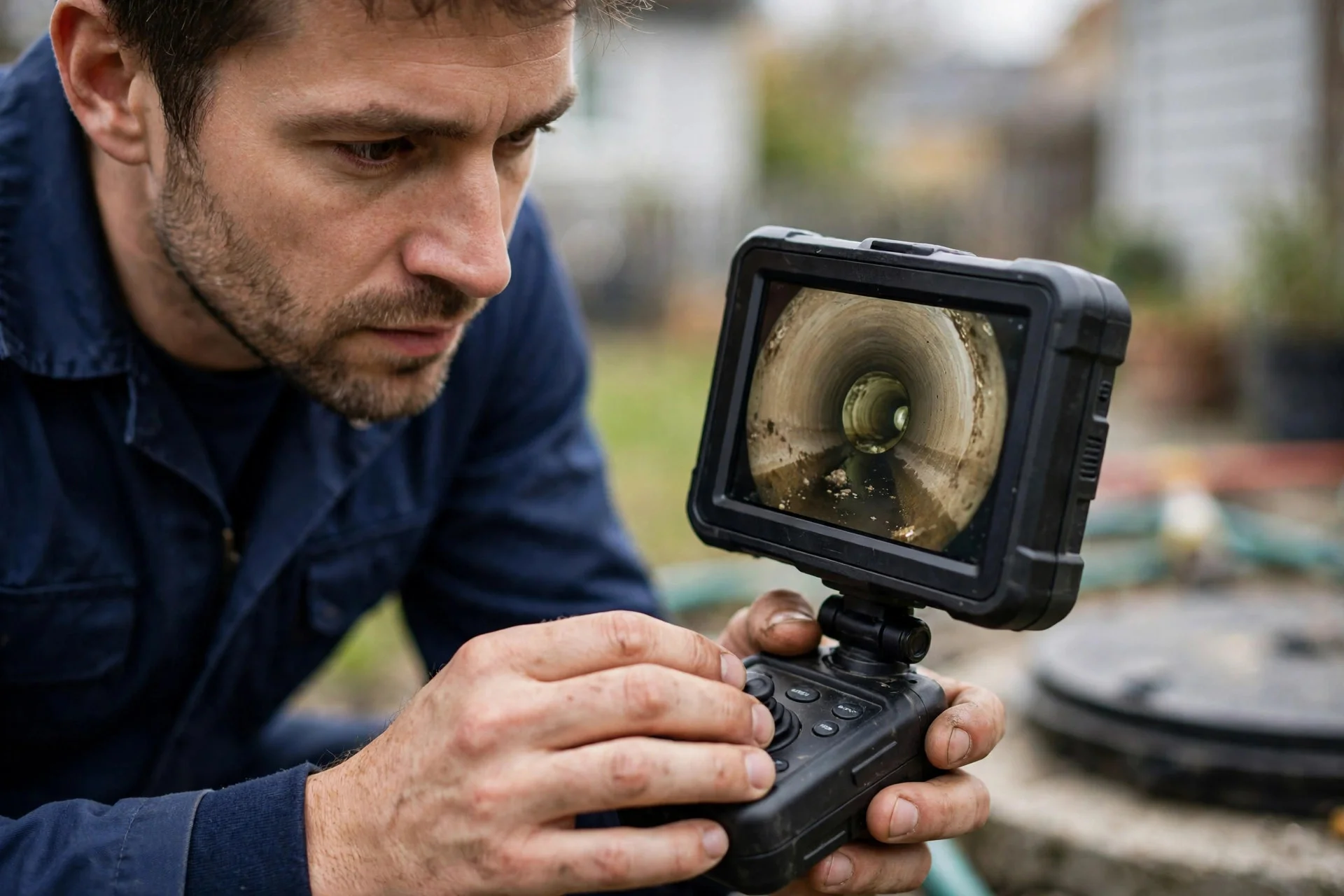
Then comes the camera, and on an emergency call the camera is what turns a rescue into a fix. That camera step is part of what an emergency plumber in Rockwall, TX should do before quoting anything beyond the clearing itself. A cable tells you the line is open. It does not tell you the line is sound. We push a camera head through the cleanout and watch the inside of the pipe on a monitor, and we show you that footage on screen while we are still at your house. Roots look like hair growing through a joint. A belly looks like standing water that never drains. A cracked section looks like a dark line across the pipe wall. An offset joint looks like a step where one pipe section dropped below the next. That footage is the difference between paying for the same emergency twice and paying once for the cause. Without it, every recommendation after a backup is a guess dressed up as expertise. With it, you can see the same thing we see and decide with the same facts.
The camera step itself gets a full explanation on the sewer camera inspection page, including what each finding looks like on screen.
Why backups happen in Rockwall ground: clay movement, root mats, cast iron, main line focus
Rockwall ground does most of the damage before any drain ever backs up. The soil here is expansive clay. It swells when it gets wet and shrinks when it dries, and that movement never stops across a year of wet springs and dry summers. A sewer line buried in clay does not sit still. It shifts at the joints, sags into bellies where the bedding moves, and opens hairline gaps that were tight the year the house was built. A drain that ran fine for years can start backing up after a wet season and a dry season in sequence, not because anyone did anything wrong, but because the ground moved the pipe. That is why Rockwall backups often arrive in clusters after weather swings: the ground moved, the joints opened a little more, and the next heavy use pushed the line past what it could still pass.
Then the trees do their part, and in Rockwall the trees are a serious force. Yards are full of mature oaks and elms, and roots follow water the way water follows the path of least resistance. A root does not need a broken pipe. It needs a joint gap the width of a thread, and clay movement hands it exactly that gap. Once a root hair gets into the flow, it thickens, catches paper and grease, and grows into a mat. That mat is the single most common cause of a Rockwall main line backup, and it explains why the same house backs up again a few months after a basic clearing: the cable cut a channel through the mat, and the mat grew back around it. A root mat does not announce itself with a single slow drain. It announces itself when the washer runs and the tub fills, because the mat can pass a sink of water and cannot pass a washer load.
Pipe age and the main line focus
Pipe age adds the third pressure, and it acts differently depending on the era of the house. Older Rockwall homes often still run cast iron inside, and cast iron closes up from the inside as it scales. A cast iron line does not fail all at once. It narrows year by year until a normal day of use becomes a slow drain, and then a backup. The narrowing also catches paper and grease that a smooth pipe would pass, so the line that drained fine at a wider bore becomes the line that backs up at a narrower one. Newer homes are not immune either. PVC laterals still shift in clay, still collect grease at the kitchen run, and still take root intrusion at the joints. The mechanism changes with the era. The result is the same emergency call, and the camera is what tells us which mechanism is driving yours.
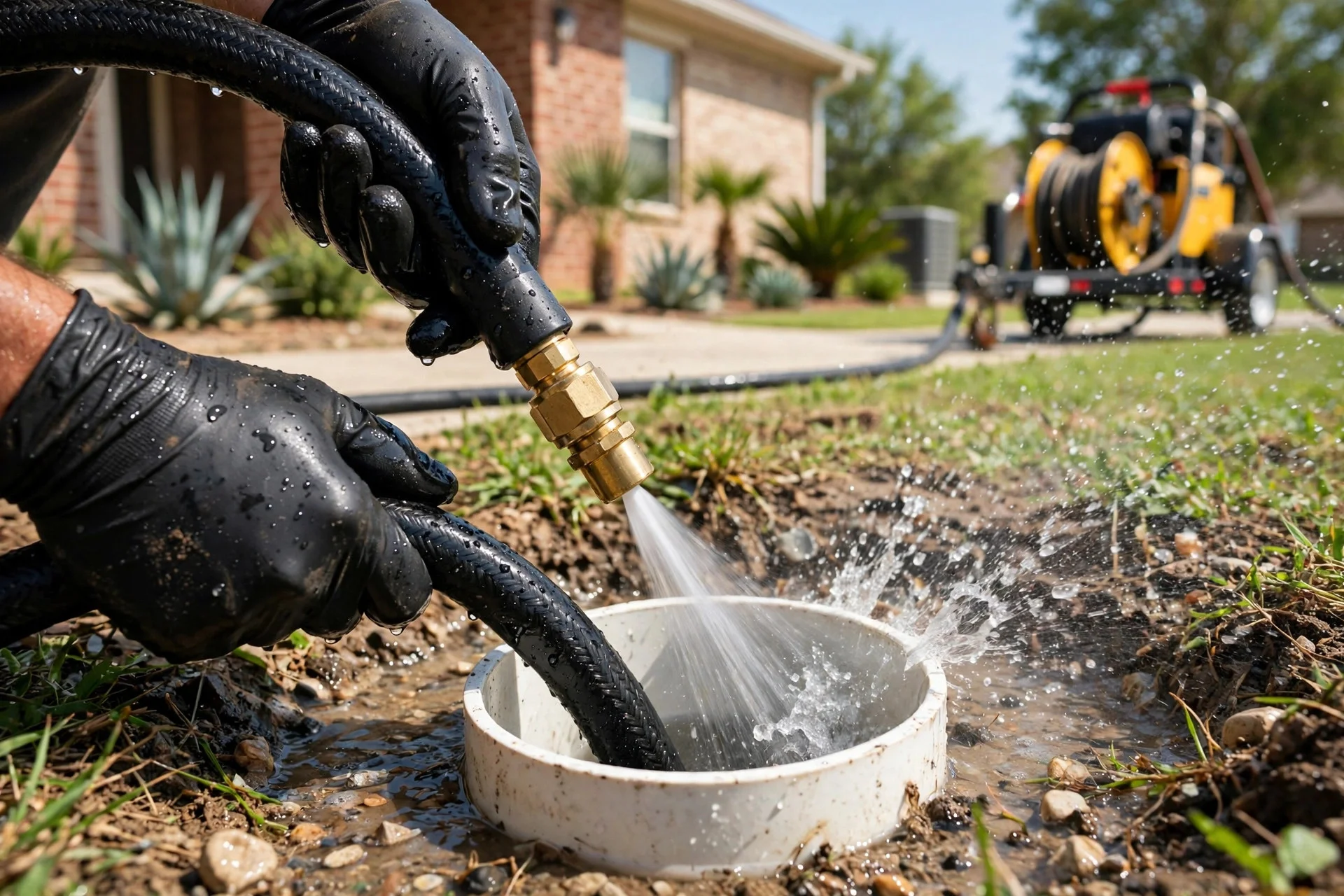
That is why the main line is the focus of every emergency page and every emergency visit. Fixture drains cause slow sinks. Main lines cause backups. When the whole house is affected, the problem is downstream of every fixture, in the run that carries all of them to the street. Clearing one fixture while the main line stays blocked changes nothing, and a crew that treats a whole house backup as a fixture problem will be back the same week. The emergency work is main line work: open the main, prove the whole house drains, run the camera, and name the cause in the main run. Everything else is a detail around that center.
Emergencies in Rowlett and Wylie: support for the lake towns
Rockwall is the home base, and the lake towns around it share the same ground, the same trees, and the same failure patterns, so emergency drain help here covers Rowlett and Wylie on the same drain only basis. Rowlett sits just across the lake, and its housing stock runs older on average, with a median build year of 1999, which means Rowlett emergency calls skew toward cast iron narrowing and long service laterals that give roots more joints to enter. A Rowlett backup that shows at the lowest fixture first, with several fixtures slowing together, is a main line call in exactly the same way a Rockwall backup is, and the triage on this page applies the same way: stop water, note the fixture order, keep people out of standing sewage, and let the crew open the cleanout and run the camera. The difference in Rowlett is not the emergency. It is the odds: older pipe and mature landscaping make a repeat backup more likely unless the camera finds the cause after the first clearing.
Wylie brings a different mix, with newer subdivisions meeting young trees that are already putting root pressure on joints in clay that has not settled. A Wylie emergency often looks like a newer home backing up for the first time, which surprises homeowners who assume a young house cannot have a sewer problem. It can, because clay movement does not wait for a house to age, and a single bad joint in a young lateral is all a root needs. The emergency response is the same: stop water, protect the lowest rooms, and get the main line open and camera inspected before anyone promises that a clearing alone will hold. We do not claim a volume of calls in either town, and we do not rank one town over another. We cover Rowlett and Wylie because the ground and the trees do not stop at the city line, and a drain crew that knows Rockwall clay already knows what it will find under a Rowlett or Wylie yard.
For homeowners in either town, the practical advice is identical to Rockwall. If sewage is rising, stop running water. If the whole house is slow at once, treat it as a main line emergency. If one fixture is slow and everything else is normal, schedule a visit. And after any emergency clearing in Rowlett or Wylie, ask for the camera footage before you agree to anything else, because the footage is what separates a one time clearing from a repair plan that actually holds.
Rowlett and Wylie each get their own full treatment, drain cleaning in Rowlett and drain cleaning in Wylie, with the same triage and the same camera first rule applied to their own ground and housing stock.

After the emergency: camera and the real fix
Once the water is down and the house drains quietly, the emergency is over and the real question begins, which is why it backed up and whether it will back up again. The camera footage from the emergency visit is the starting point for that question, and the honest answers fall into a small set of paths. If the camera shows a root mat at one or two joints and the pipe wall is otherwise sound, the fix may be a thorough cleaning plus a follow up plan that keeps roots from rebuilding the mat. If the camera shows a cracked or offset section, or a belly holding standing water, cleaning alone will not hold, because the pipe itself cannot drain or cannot stay sealed. That is where repair enters the conversation, and it deserves its own full explanation on the sewer line repair page, which covers what repair means, how a line fails in Rockwall, and how the crew decides between a spot repair and a section repair.
If the camera shows failure along the length of the run, not at one joint but at joint after joint, or a line that has lost its shape, repair at one point will not hold either, because the next joint will fail on the same schedule. That is the point where replacement becomes the honest answer, and the sewer line replacement page explains what replacement involves, step by step, and why bedding and grading in clay ground decide whether a new line lasts. We link those pages here instead of repeating them, because each one deserves its own full treatment, and because the after emergency decision should be made with the footage in front of you, not with a paragraph on this page standing in for the footage.
The one thing to avoid after an emergency is the repeat clearing cycle, and an emergency plumber in Rockwall, TX who shows you the footage is giving you the way out of that cycle. A second emergency clearing for the same backup, with no camera footage and no plan, is a sign that the cause was never named. Ask for the footage. Ask what the camera showed at each joint. Ask whether the pipe wall is sound, whether there is a belly, and whether the failure is local or along the run. Those four answers point to cleaning, repair, or replacement, and a crew that can answer them from footage is a crew that can fix the cause instead of selling you the same rescue again.
For what drives the price of the fix that follows, the cost guide walks through the factors that move a repair or replacement number, so the footage and the price make sense together.
What not to do during a backup
A backup brings out well meaning moves that make the problem worse, and most of them feel helpful in the moment. Do not keep flushing to see if the line cleared, because each flush adds water to a system that is already sending water back. Do not run the washer or dishwasher to finish a load, because a full cycle sends far more water down the line than a sink ever will, and that volume is what turns a slow drain into a flooded floor. Do not plunge aggressively at one fixture while sewage is rising at another, because the pressure has to go somewhere and it will go up through the lowest open fixture. Do not pour chemical cleaner into a backed up line, because it will not clear a main line blockage and it will make the standing water hazardous for the crew that has to work in it.
Do not open the cleanout cap yourself while the line is under pressure, and do not mop sewage toward another drain in the hope that it will disappear down that drain. That drain connects to the same blocked line, so mopping only spreads sewage across more floor and more rooms. Do not let children or pets walk through standing sewage, and do not put towels or rugs you care about on the floor to soak it up, because sewage soaks into fabric and the fabric then has to be discarded. Keep the affected rooms closed off, keep water off, keep people out, and let the crew open the line, prove the house drains, and show you the camera footage. Doing less in the first minutes is, in a backup, doing more.
The backup questions we hear most, answered straight, are on the FAQs page.
Is a backup always an emergency, or can it wait until morning?
If sewage is coming up through any fixture, or if the whole house will not drain, treat it as an emergency and stop running water. Waiting lets standing sewage sit longer and lets each additional use add water that has nowhere to go. A single slow fixture with no sewage and normal draining elsewhere can usually wait for a scheduled visit.
What should I do first when water starts backing up?
Stop all water use and tell everyone in the house. Keep people and pets out of rooms with standing sewage water. Note which fixtures backed up and in what order, note what was running when it started, and clear access to the cleanout if you know where it is. Leave chemical cleaner and the cleanout cap alone and let the crew handle those.
Why does my Rockwall drain keep backing up after it was just cleared?
Because the clearing cut a channel through the cause instead of removing it. Root mats grow back around a channel, grease recoats a wall, and a belly refills with standing water. A camera inspection after the clearing shows which of those is happening, and the fix follows the cause instead of repeating the clearing.
Will the crew show me what caused the backup?
Yes, on camera jobs we show you the footage on screen while we are still at your house and explain what it means before we quote a fix. Roots, bellies, cracks, and offset joints all look distinct on camera, and you decide with the same facts we have.
Do you handle drain emergencies in Rowlett and Wylie too?
Yes, on the same drain and sewer only basis as Rockwall. Rowlett calls skew toward older pipe and longer laterals, and Wylie calls often involve young laterals in unsettled clay, but the triage is the same in all three towns: stop water, note the fixture order, and get the main line open and camera inspected.
Related Services
One trade, seven services. Every service below is drain and sewer only.
Drain Cleaning
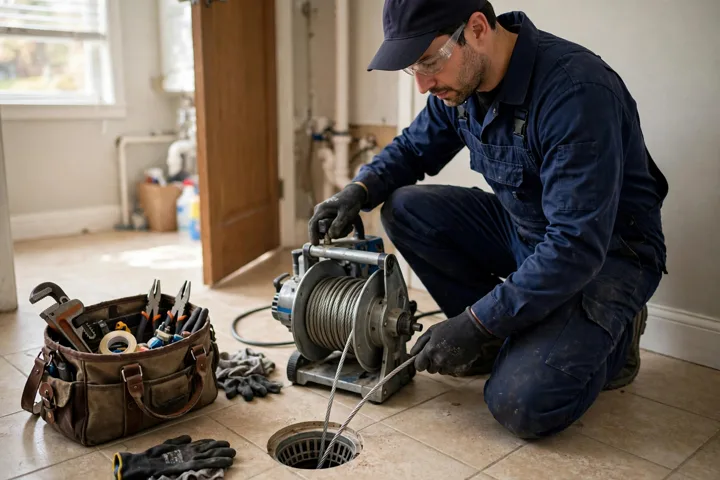
Snaking and clearing for sinks, tubs, toilets, and main lines, with the cause found, not guessed.
Learn more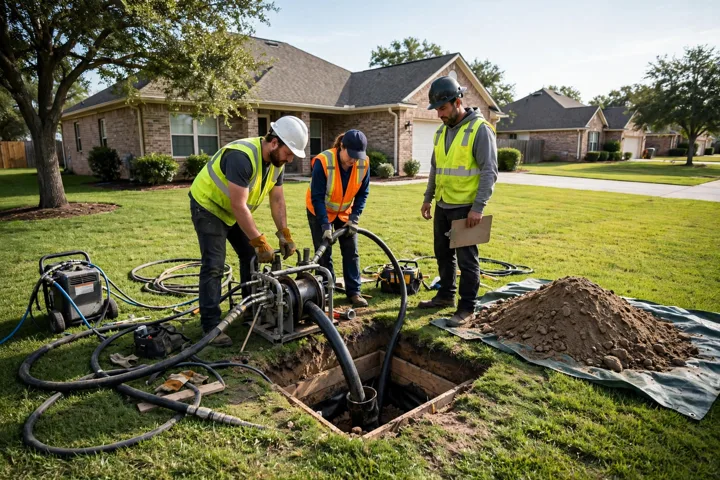
Sewer Line Repair
Spot repairs and section fixes, located by camera first, so we open only what must be opened.
Learn more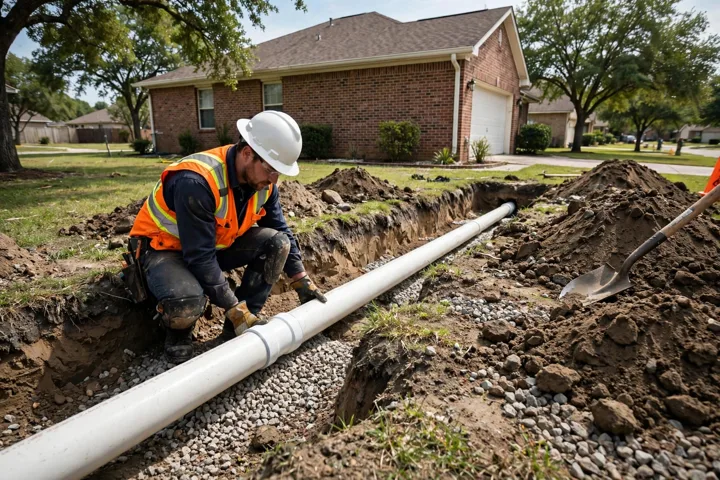
Sewer Line Replacement
Full line replacement in clay and cast iron country, bedded and graded to drain properly.
Learn more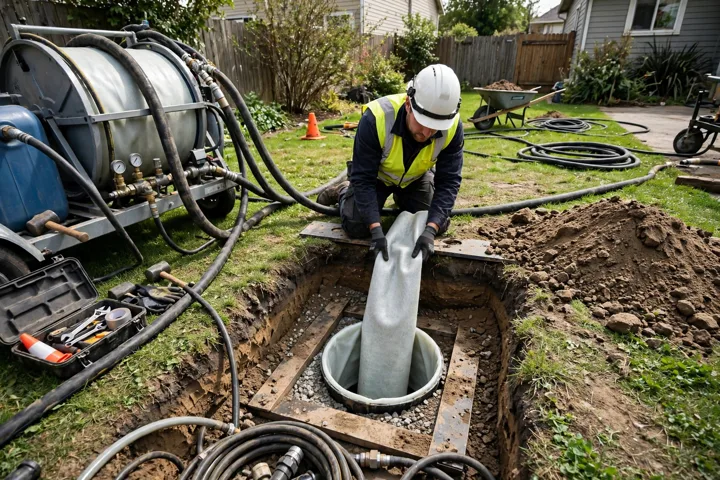
Trenchless Sewer Repair
Pipe lining and bursting that renew the line through small access points, not a torn up yard.
Learn more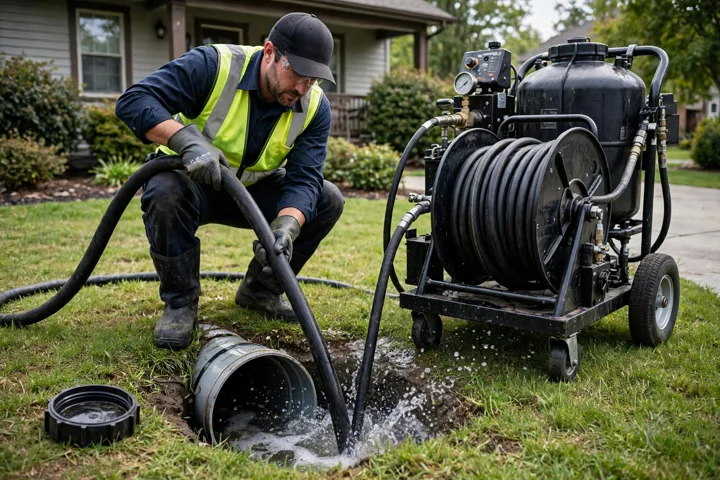
Hydro Jetting
High pressure water scouring that strips grease, scale, and roots back to a clean pipe wall.
Learn more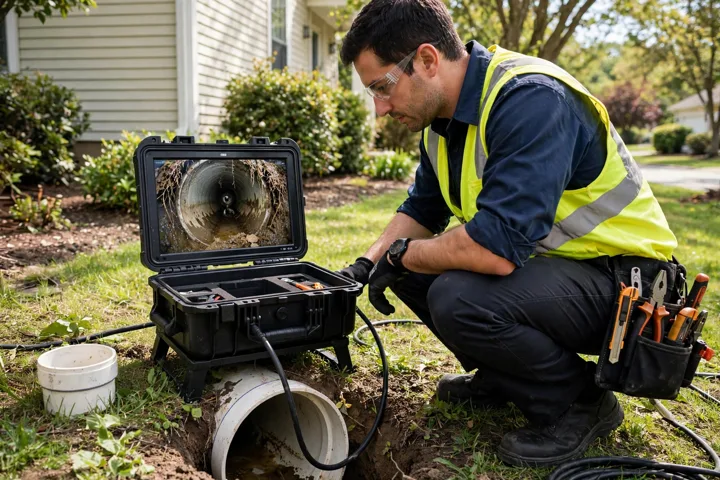
Sewer Camera Inspection
A recorded look inside the line: roots, cracks, bellies, and offsets, shown to you on screen.
Learn moreKeep Reading
Related pages worth opening next, with the ground detail that belongs to each one.
Rowlett
Drain and sewer service for Rowlett homes, from a crew that serves the Rockwall lake footprint.
Learn moreWylie
Drain and sewer service for Wylie homes, from a crew that serves the Rockwall lake footprint.
Learn moreDrain and Sewer Cost Guide
What drives the price of drain cleaning, repair, replacement, trenchless, jetting, and camera work, no guesswork.
Learn moreDrain and Sewer FAQs
Straight answers to the questions Rockwall homeowners actually ask us, in plain language.
Learn moreWhy backups are treated as urgent: the U.S. EPA notes that sanitary sewer overflows can back up into homes, causing property damage and threatening public health. U.S. EPA on sanitary sewer overflows.