Trenchless Sewer Repair in Rockwall, TX
Lining and bursting renew a failed line through small access points. No open trench along the run, no torn up yard, and the camera decides whether your line qualifies.
Request Service
Tell us what is happening. We respond fast, and we show you the problem on camera before we quote the fix.
Trenchless sewer repair Rockwall TX is the work of renewing a damaged sewer line through small access points instead of opening a trench along the whole run. We line a pipe from the inside or we burst it apart and pull a new pipe in behind, and the camera footage decides which method fits your line before anyone digs. A line that still holds its round shape and its grade can usually be renewed this way. A line that has collapsed, lost its shape, or dropped into a deep belly cannot, and we say that plainly before you spend anything on a trenchless method that will not hold.
Trenchless sewer repair Rockwall TX: lining versus bursting in plain language
At a glance
- Lining builds a new wall inside the old pipe; bursting replaces the pipe outright.
- The camera decides which method fits, before anyone digs.
- A collapsed line or a deep belly rules trenchless out.
- Access points only: no trench along the run.
- Grade is the quiet decider: trenchless preserves the grade it starts with.
Trenchless is a family of methods, not one product, and the two members of that family do different jobs. Lining builds a new pipe wall inside the old pipe. The old pipe stays in the ground and becomes a host for a liner that hardens into a smooth, jointless run. Bursting does the opposite. It breaks the old pipe apart and pulls a new pipe into the space the old pipe occupied, so the finished line is a new pipe, not a coating inside an old one. Both methods reach the line through access points at the ends of the run instead of a trench down the middle of your yard, and that shared trait is where the name comes from. The choice between them is never a matter of taste. It follows the condition of the old pipe, the diameter of the run, the bends in it, and what the camera shows about shape and grade.
Lining fits a line that is cracked, jointed, root invaded, or rough inside, but still round and still draining downhill the way it should. The liner bridges cracks and seals joints, and because it has no joints of its own, roots lose the gaps they used to enter through. Bursting fits a line that is too far gone to host a liner but still has a path a bursting head can follow, for example a line whose wall is broken in several places but whose overall alignment is still there. Bursting also fits a run where a slightly different pipe capacity is wanted, because the new pipe is its own pipe rather than a sleeve inside the old bore. What neither method does is straighten a line that sags, lift a belly back to grade, or reopen a pipe that has flattened. Grade is the quiet decider in all of this. A sewer line works by gravity, and any method that preserves a bad grade preserves a bad drain.
Small digging at access points, not zero digging
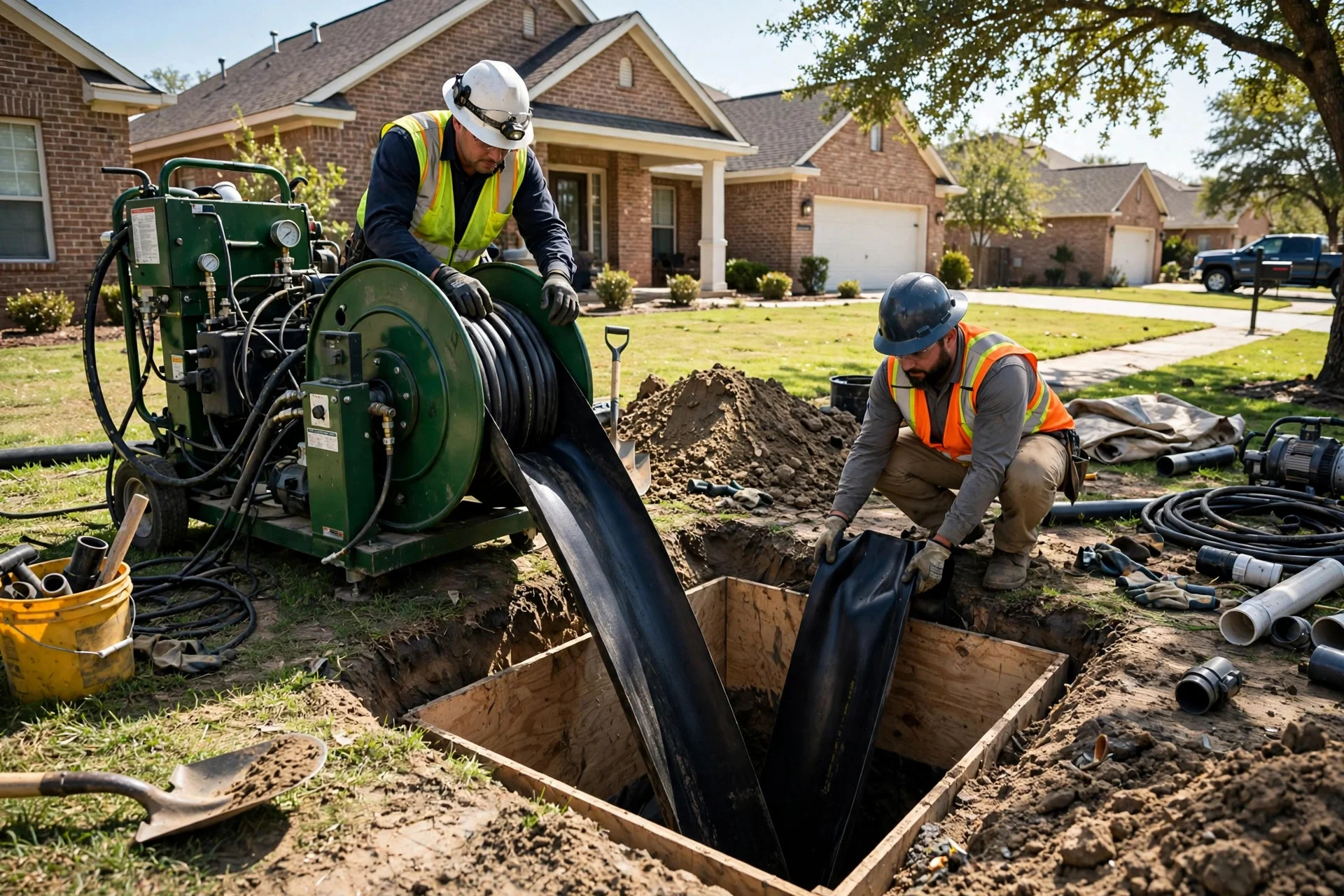
Homeowners sometimes ask whether trenchless means no digging at all. It does not, and any crew that promises zero digging is overselling the method. Trenchless means small digging at access points instead of a long open trench. We still need a way into the line at each end of the run, and we still need room to work at those points. What you avoid is the trench itself: the long cut through grass, beds, walks, and drives, the spoil pile beside it, and the restoration that follows. That distinction matters because it sets expectations honestly. Your yard is disturbed at the access points. It is not cut open end to end.
Another honest distinction is the difference between renewing a line and cleaning it. A jetting pass or a root cutting pass makes a bad line drain again for a while. It does not change the pipe wall, close a crack, or seal a joint. Trenchless work changes the pipe itself, so the root entry points and the crack paths are gone rather than merely cleared. That is why the camera matters so much before trenchless work. Cleaning answers the question of what is blocking the line today. Trenchless answers the question of what the line itself has become, and whether a new wall or a new pipe is the fix that lasts.
Pipe lining, step by step
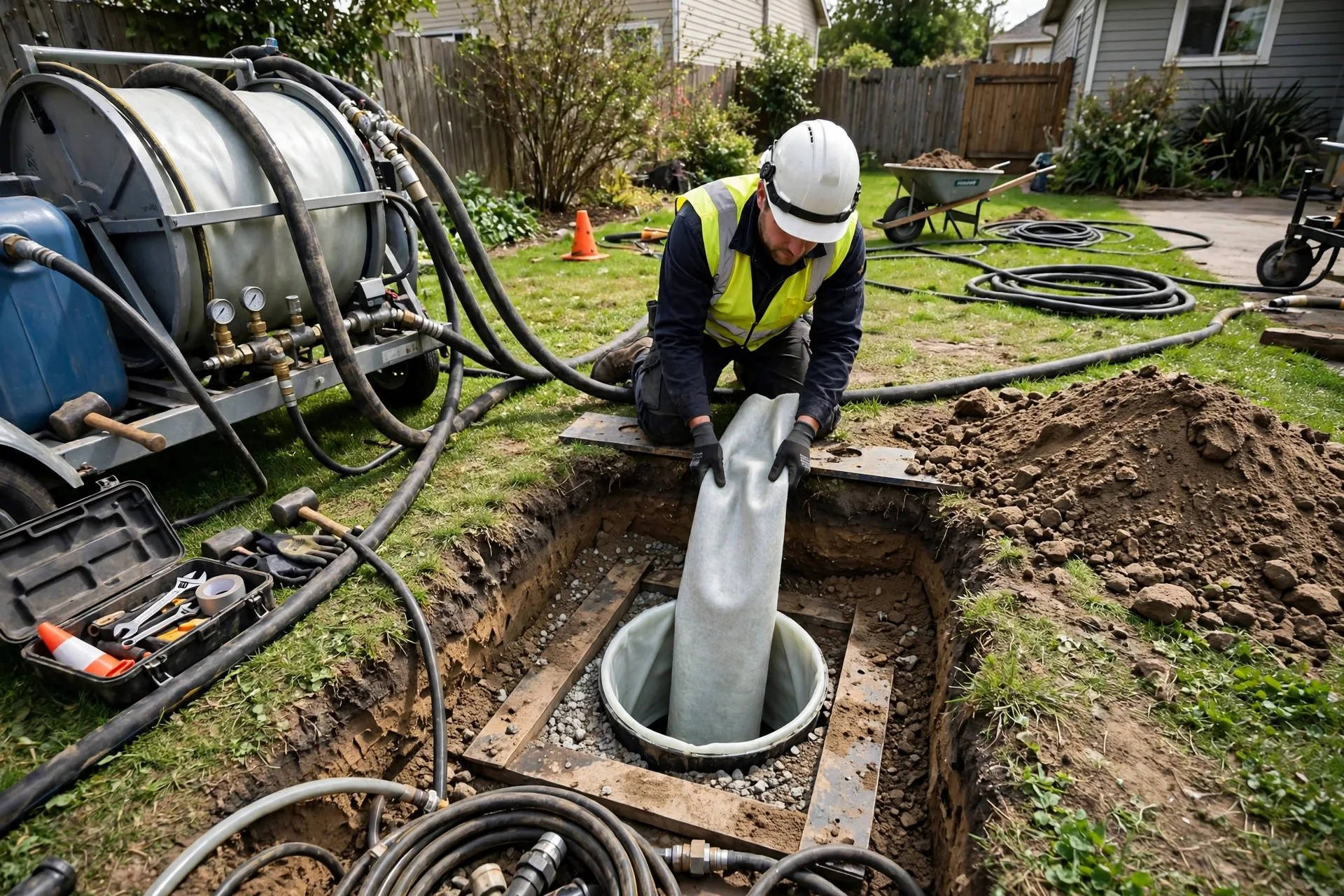
Lining starts before any liner comes out of a box. We camera the line first, and we clean it, because a liner bonds to the wall it is given and a wall coated in grease, scale, or root mat is a poor host. The cleaning pass is not a courtesy. It is part of the lining job. Roots are cut back, loose scale is removed, and the wall is left as clean as the old pipe allows. Then we camera again, because the first pass sometimes reveals a crack or an offset that was hidden behind the mat, and that finding can change the plan while changing it is still cheap. Only when the cleaned line reads true on camera, round and graded, do we measure the run and prepare the liner to length.
The liner itself is a flexible sleeve soaked in resin. We feed it into the line from an access point and invert or pull it through the run until it spans the damaged section from end to end. Once it is in place, it is expanded against the old pipe wall so it takes the shape of the host pipe, including gentle bends. Then it cures in place, hardening into a rigid, smooth, jointless pipe inside the old one. Curing is a waiting step, not a watching step. The resin needs its full cure before water runs through the line again, and rushing that step is how a liner ends up wrinkled or soft in a spot. We do not run fixtures during the cure, and we say so at the start of the job so nobody in the house flushes at the wrong moment and finds out the hard way.
Camera work comes first on every lining job, and the sewer camera inspection page shows what the footage reveals before any liner is ordered.
Pipe lining: the proof pass and the finished line
After the cure, we camera the lined run again. This pass is the proof of the job, not a formality. We look for a smooth wall with no wrinkles, no lifted edges, and no sections where the liner failed to press fully against the host. We also check the ends of the liner, where it meets the sound pipe on either side, because a liner that stops short or leaves a lip at a joint leaves a place for paper to catch. We also reopen any branch connections that the liner covered during installation, cutting them open from inside the line with a camera guided tool so fixtures on those branches drain into the lined run again. A lined main that leaves a branch sealed is not a finished job. It is a new blockage waiting for the first flush.
The finished lined section behaves differently from the old pipe in one important way: it has no joints. Joints are where Rockwall lines fail most often, because clay movement opens them and roots enter through them. A jointless run removes that whole failure mode along the lined length. The old pipe is still out there, surrounding the liner, and in ground that moves, the liner moves with its host rather than fighting it. That is a strength, not a weakness, as long as the host still holds its shape. A liner is only as true as the pipe it lines, which brings us back to the camera. Shape first, liner second, always in that order.
What lining feels like from inside the house is quieter than most homeowners expect. The work concentrates at the access points, not along the whole run. Water is off to the sewer line during the cure, so the house plans around that window, and the crew tells you the window before the liner goes in rather than after. When the job is done, the line drains the way a new pipe drains, smooth and without the snag points that used to catch paper and grease. The yard shows the access points, not a trench scar, and the grass over those points is the restoration, not a full regrading of the run.
Pipe bursting, step by step
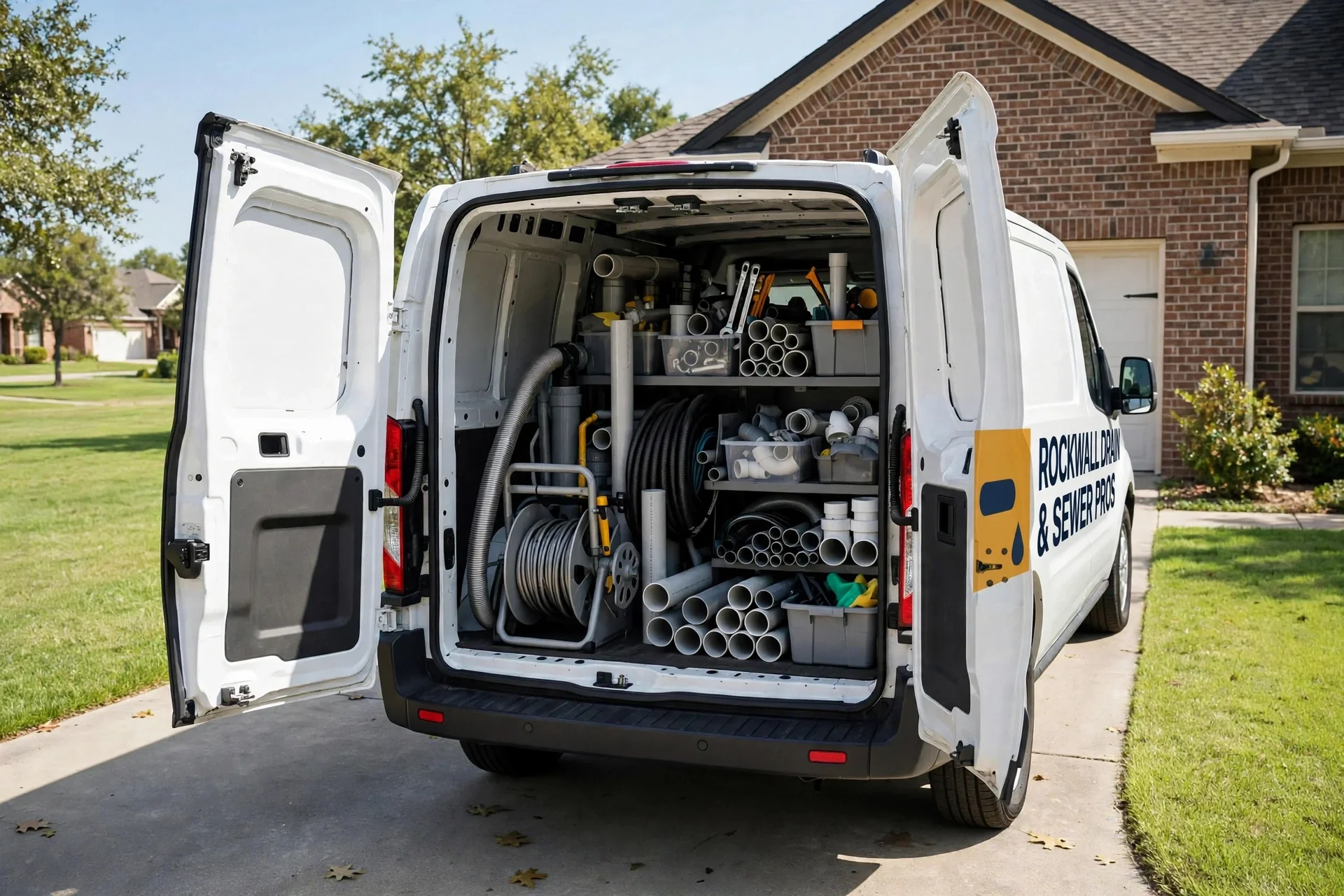
Bursting starts the same way lining does, with a camera pass and a cleaning pass, because the bursting head needs a path it can follow and the crew needs to know exactly what that path looks like. The camera map for a bursting job is more detailed than a quick look. We note every bend, every branch connection, every place the line changes direction or depth, and every spot where the ground above the line carries a walk, a drive, or a bed that cannot be disturbed. Bursting replaces the pipe, so the plan has to account for everything the old pipe connected to along its length. A branch that joins the main mid run needs a plan for reconnection after the new pipe is in, and that plan is made on paper before the head ever enters the ground.
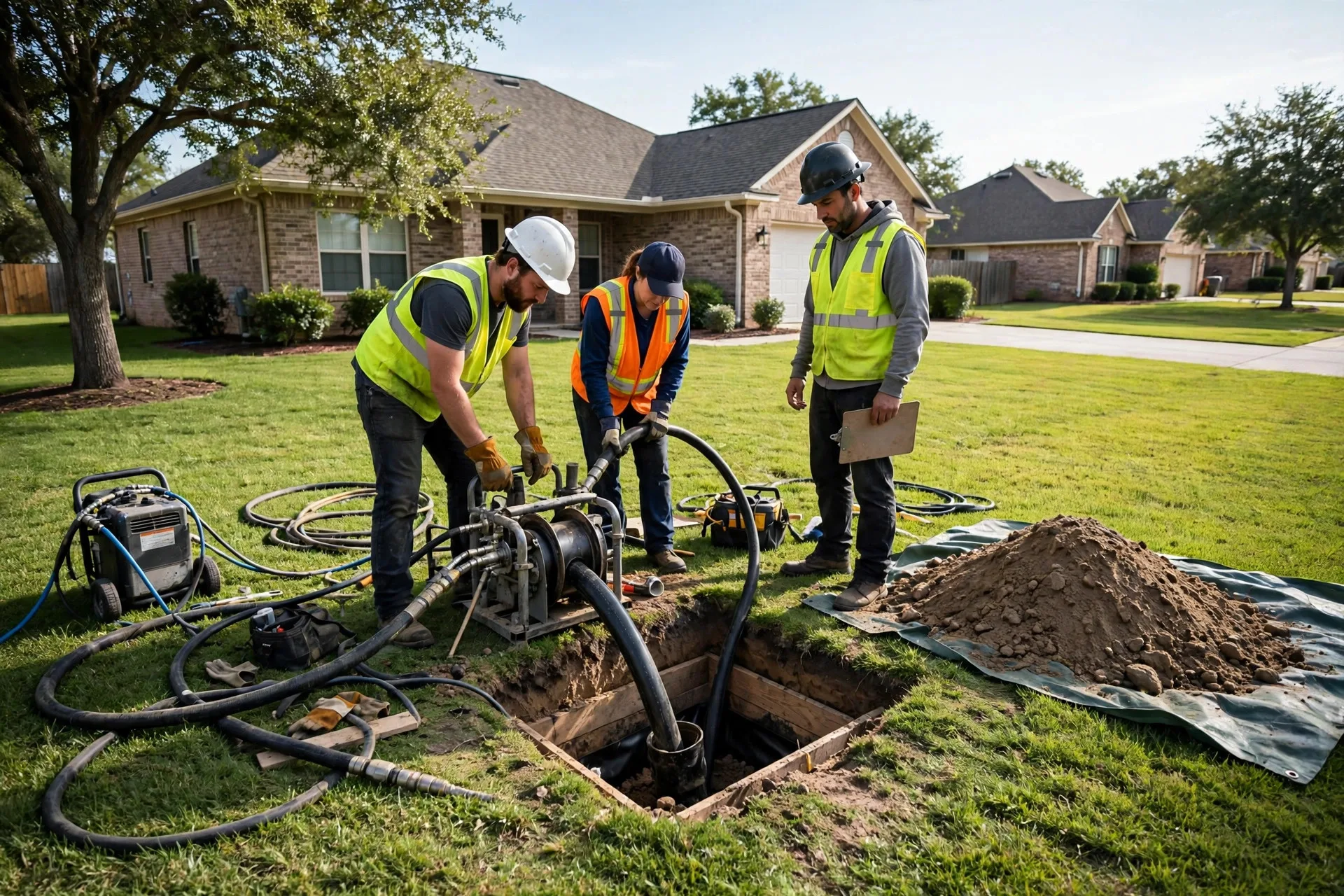
The work itself uses two access points, one at each end of the run. A bursting head enters at one end and travels the length of the old pipe, breaking it apart as it goes. A new pipe follows directly behind the head, pulled into the space the old pipe occupied. The ground above the line is not opened along the run, but it is not untouched either. The bursting action displaces soil around the old pipe, and that displacement is why the method needs room around the line and a soil that can accept it. In tight ground with other buried lines close by, or where the old pipe runs hard against a structure, bursting may not be the right call even when the pipe itself is a candidate. The camera and a careful site walk decide that, not enthusiasm for the method.
The cleaning pass before bursting is usually hydro jetting, which scours the wall the new pipe will follow.
Pipe bursting: the pull, the connections, and the finished pipe
As the new pipe advances, the crew watches its progress and its alignment, because a new pipe that wanders off the old alignment can miss a branch connection or end up shallow where it should run deep. When the head reaches the far access point, the new pipe is in place along the full run, and the ends are connected to the sound pipe on either side. Branch connections are then restored, each one tied back into the new main so every fixture in the house drains into the new line. Then comes the camera pass that proves the job: a full run from end to end, checking for a straight, clean bore, sound connections, and no debris left in the line from the bursting pass.
Bursting earns its keep on lines that lining cannot save. A pipe whose wall is broken in several places, whose joints have separated beyond what a liner can bridge, or whose material has gone brittle and crumbly is not a good host for a sleeve. Bursting does not ask the old pipe to host anything. It removes the old pipe from the equation and leaves a new one in its place. That makes bursting the honest answer for a line that is failing along its length rather than at one or two spots. It also makes bursting a bigger operation than lining, with more force, more equipment at the access points, and more care needed around nearby buried lines. We say that up front, because a homeowner who expects a lining job and gets a bursting job has been misled about the scale of the work, even if the result is sound.
The finished bursting job leaves the house with a new pipe, not a renewed old one. The new pipe has its own joints, made to current practice, and its own wall, and it carries the same grade the old line carried, because bursting follows the old alignment rather than inventing a new one. If the old alignment included a belly, bursting preserves that belly, which is why a bellied line is not a bursting candidate either. Method follows grade. That rule never changes, whichever trenchless method is on the table.
The camera qualifies the line: shape, collapse, and belly rules
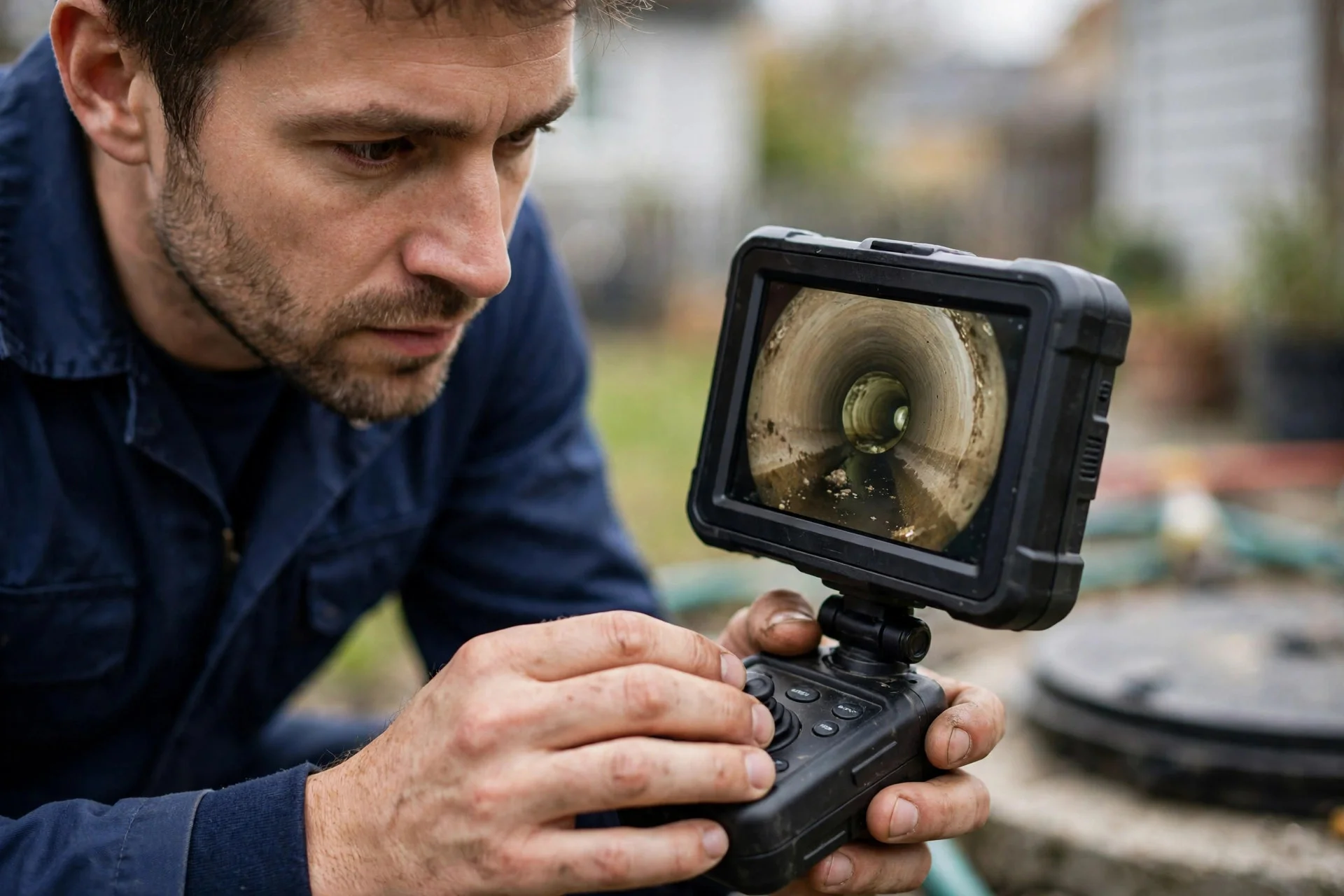
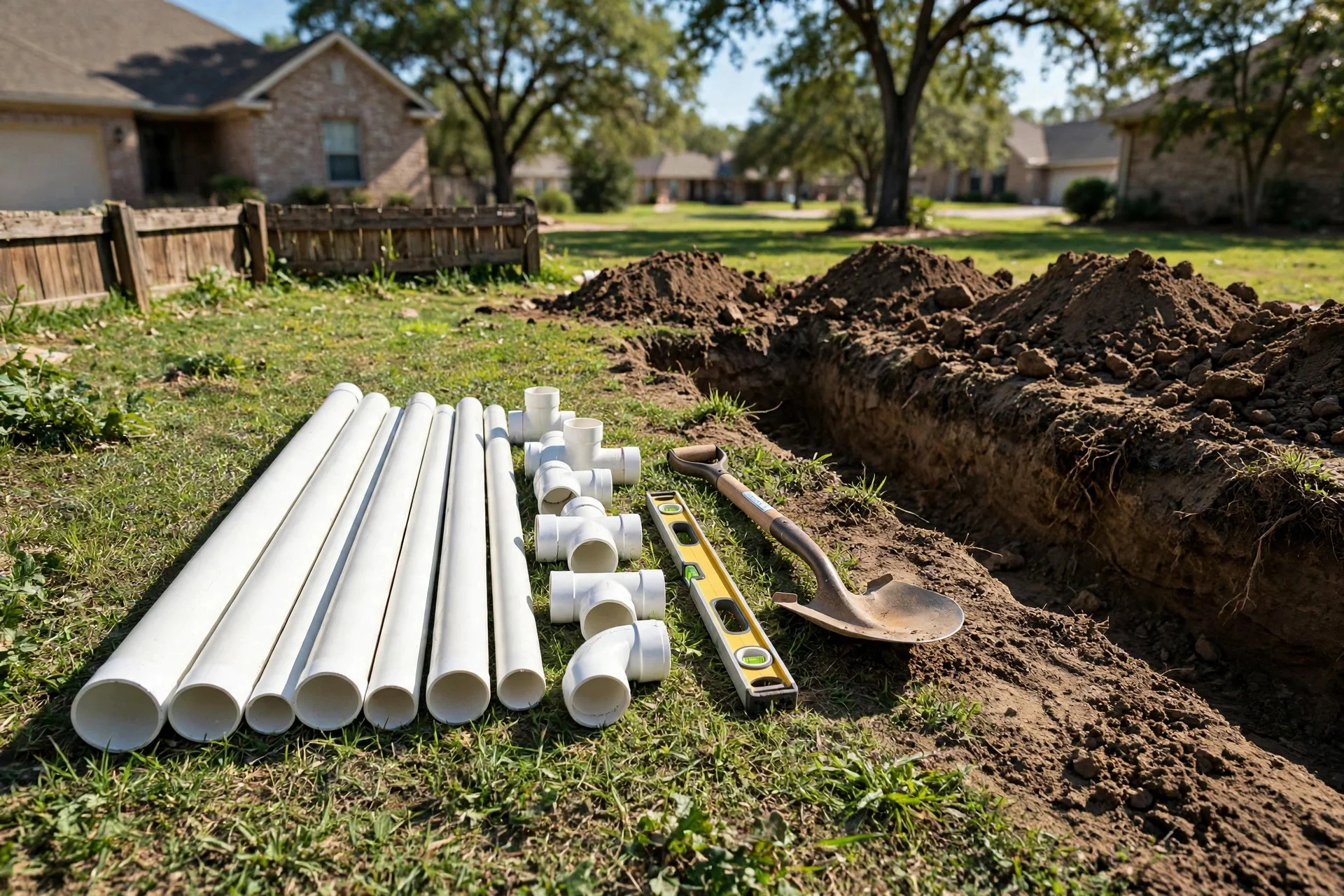
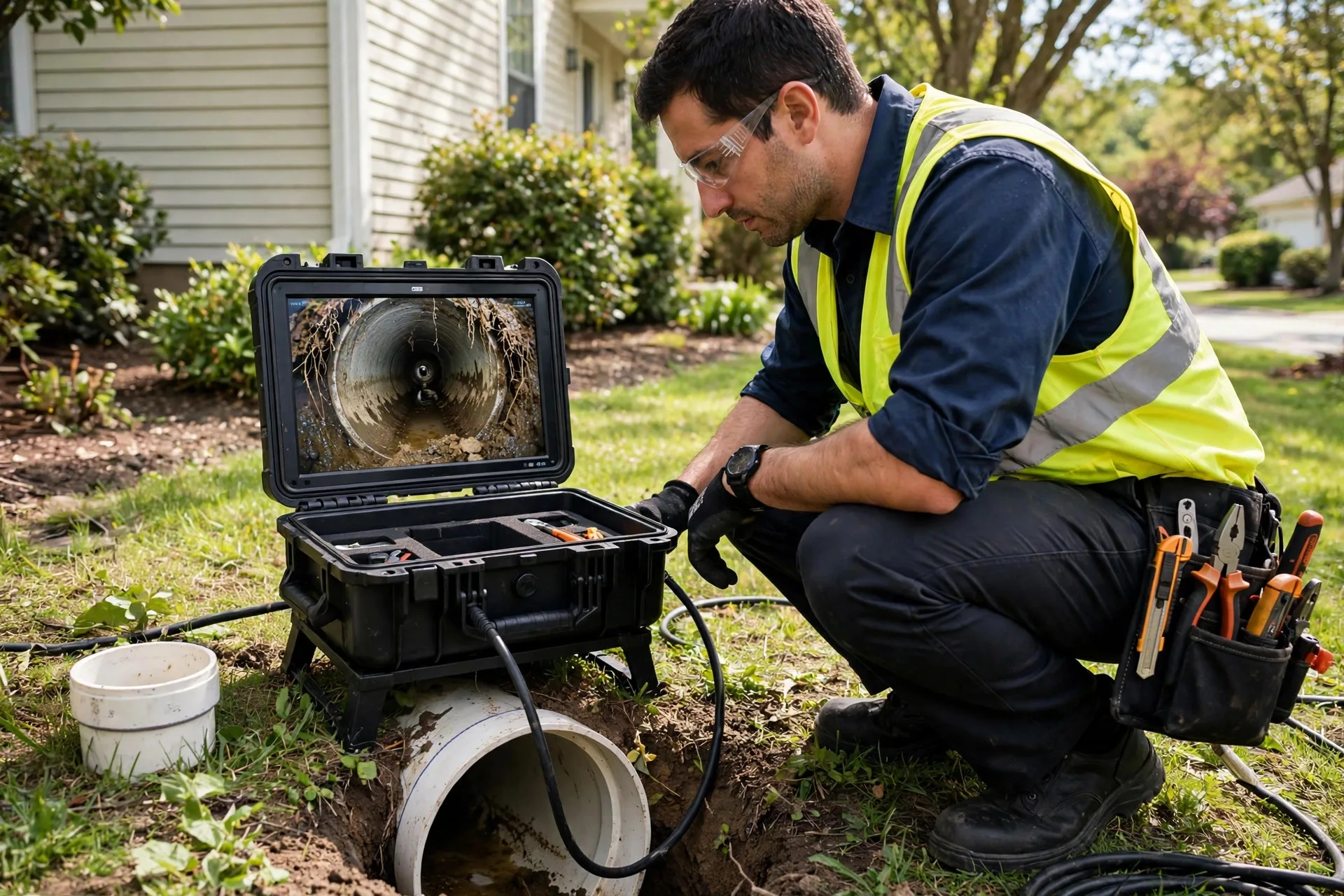
No trenchless job starts without a camera, and that is not a sales step. It is the qualification step, and it has veto power over the whole job. The camera answers three questions that decide whether trenchless fits at all. First, does the line still hold its round shape along the full run? Second, is any section collapsed, flattened, or broken open so far that a liner has nothing to press against and a bursting head has no path to follow? Third, does the line hold its downhill grade, or does any section sag into a belly where water stands instead of flowing? A yes on shape and grade, with damage limited to cracks, joints, and root entry, points toward lining. Damage spread along the length with a sound alignment points toward bursting. A no on shape or grade points away from trenchless entirely, and that no is a useful answer, because it saves you from paying for a method that cannot hold.
Shape loss shows up on camera in ways that are easy to read once you have seen them. A pipe that has gone oval looks pinched on the monitor, with the top and bottom closer together than the sides. A pipe that has flattened shows a roof that has dropped toward the floor of the pipe. A section that has broken open shows daylight through the wall, or soil pressing into the bore. None of those sections will host a liner well, because a liner pressed into a flattened pipe cures into a flattened pipe, and the bore that results is too small to drain the house. Bursting also needs a path, and a fully collapsed section gives the head nowhere to go. When we see shape loss, we mark its location and its length on the footage, and we talk about sewer line replacement for that section instead of forcing a trenchless method onto it.
Bellies, offsets, and the rest of the camera map
Bellies are subtler and just as decisive. A belly is a sag in the line where water stands. On camera, you see the water level sit in the pipe even when no fixture is running, and you see paper and debris settle in that standing water. A shallow belly that still drains, slowly, is a judgment call, and we say so rather than pretending the line is either perfect or hopeless. A deep belly that holds water across a long section is not a trenchless candidate, because lining a belly gives you a smooth belly that still holds water, and bursting a belly gives you a new pipe that sags in the same place. The fix for a belly is to regrade that section, which means opening the ground there and resetting the pipe at the right fall. That is traditional work, and it is the honest work for that defect.
The camera also maps the things that do not veto trenchless work but shape how it is done. Offsets at joints, where one section has dropped a step below the next, tell us where a liner will need to bridge a lip and where a bursting head may hang up. Root masses tell us how much cutting the cleaning pass needs before lining. Scale on cast iron tells us how much bore is left after cleaning, because a liner inside a heavily scaled pipe leaves a smaller finished bore than the same liner inside a clean pipe. Bends tell us how far a liner can travel cleanly and where a bursting pull may need extra care. All of that goes into the plan before the method is chosen, and you see the footage while we explain it, so the recommendation is not a mystery. It is a reading of what is on the screen, and that reading is the core of trenchless sewer repair Rockwall TX work done honestly, because the method follows the footage rather than the other way around.
Trenchless versus traditional digging: the honest trade-offs
The table tells the shape of the trade-off, and the words around it tell the rest. Trenchless wins on disturbance. A yard without a trench is a real benefit, especially where the run crosses a drive, a mature bed, or a patio that would cost real effort to rebuild. It also wins on speed of restoration, because restoring two access points is a smaller job than restoring a trench. Those are genuine advantages, and they are the reason trenchless exists. They are not the whole story, and a crew that sells only the advantages is not giving you the full choice.
Traditional digging wins on certainty and on grade. An open trench lets the crew see the pipe, the bedding, the soil, and the connections with their own eyes, and it lets them set the new pipe at exactly the fall the line needs. For a bellied line, that is not a nice extra. It is the fix itself. For a collapsed line, the open trench is the only way to remove the failed pipe and lay a sound one. Digging also wins on surprises. A camera shows the inside of the pipe, but it does not show a buried line crossing just above the sewer, a pocket of unstable soil, or a root mass wrapped around the outside of the pipe. An open trench reveals those things as the crew works, and a trenchless run can be stopped cold by a surprise the camera could not see.
For what drives the price of each method, see the drain and sewer cost guide.
| Question | Trenchless | Traditional digging |
|---|---|---|
| Ground opened | Small access points at the ends of the run | A trench along the full length of the failed section |
| Yard and hard surfaces | Access points only; walks and drives along the run stay in place | Trench crosses grass, beds, walks, and drives in its path |
| Pipe result | A lined wall inside the old pipe, or a new pipe pulled into the old alignment | A new pipe set at a corrected grade in an open trench |
| Grade problems | Cannot correct a belly or a sag; preserves the old grade | Can regrade the section and set the fall correctly |
| Collapsed sections | Cannot renew a line that has lost its shape | Can remove and replace collapsed pipe directly |
| Branch connections | Reopened from inside after lining, or reconnected after bursting | Reconnected in the open trench where the crew can see them |
| Job footprint in the house | Water off the sewer line during lining cure or bursting pull | Water off while the trench section is replaced |
| Restoration | Access points restored; no long trench to regrade | Trench backfilled, compacted, and restored along its length |
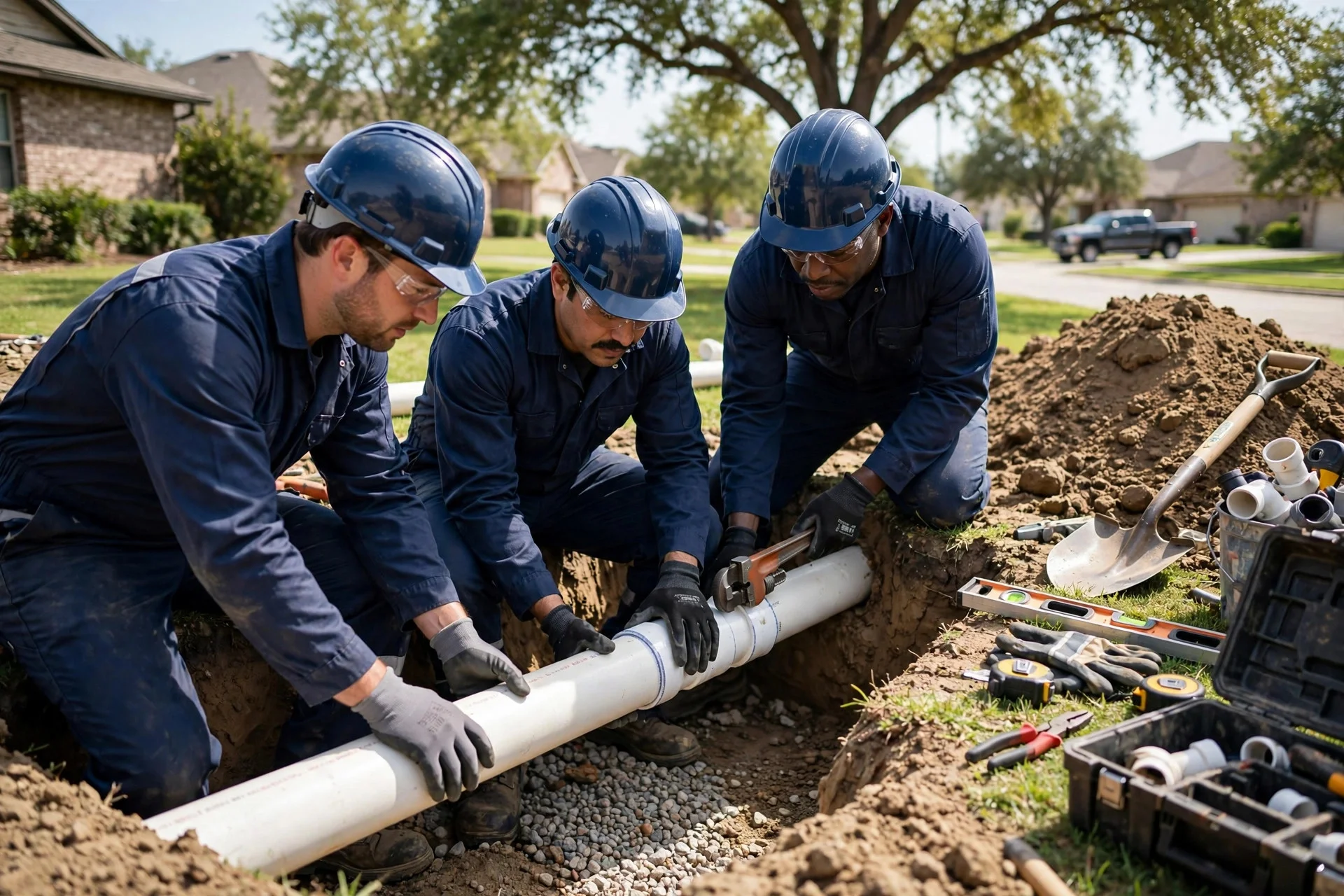
How we decide between trenchless and digging
There is also a trade-off in how the finished pipe is verified. A lined or burst run is verified by camera after the fact, which is a strong check, but it is a check of the inside of the pipe only. A trenched run is verified by eye as it is laid, joint by joint, and then by camera as well. Neither check is weak, but they are different, and a homeowner who wants to watch the new pipe go in joint by joint will get that satisfaction only from a trench. Cost follows the same honest pattern, and we will not pretend otherwise: trenchless methods carry specialized equipment and materials, and traditional digging carries excavation and restoration labor. Which one costs less on your job depends on the length of the run, what sits above it, and how much restoration a trench would demand. A short run under open grass may be cheaper trenched. A long run under a drive may be cheaper trenchless. The camera and the site walk produce that comparison for your house specifically, not as a general claim about trenchless work everywhere.
The decision rule we use is simple enough to state and strict enough to trust. If the line holds shape and grade, trenchless is on the table, and we compare lining against bursting on the damage pattern. If the line has lost shape or grade, trenchless is off the table, and we talk about a trenched repair or replacement for the failed section. If the run crosses something that cannot be disturbed, that pushes toward trenchless when the line qualifies, and if the run sits under open ground with a belly, that pushes toward digging. Your yard, your pipe, and your footage decide. The method does not decide for them.
Rockwall ground and trenchless: clay, roots, cast iron, lake lots, access constraints
Rockwall ground is the first thing we think about on a trenchless job, before the method and sometimes before the pipe. The soil here is expansive clay. It swells when wet and shrinks when dry, and that cycle moves everything buried in it. A sewer line in clay does not fail in one dramatic moment. It shifts at the joints a little at a time, sags where the bedding moves, and opens gaps that roots find. Trenchless methods have to live in that same moving ground after the job, and that shapes how we judge a candidate line. A lined run moves with its host pipe, which is good when the host still holds its shape, because the liner is not fighting the ground on its own. A burst run is a new pipe in the same moving soil, and its joints are the places clay movement will test first. Neither method repeals clay movement. Both methods have to be judged against it, and a line that is still shifting actively, with fresh offsets appearing between camera passes, is a line we want to watch before we renew, not a line we rush to line.
Roots are the second Rockwall pressure, and they come mostly from the mature oaks and elms that make the lake neighborhoods what they are. A root does not need a broken pipe. It needs a joint gap, and clay movement hands it one. Once inside, a root mat catches paper and grease and grows until the line slows, then blocks. Lining answers roots directly, because a jointless liner removes the entry points along the lined length. Bursting answers them too, because the new pipe starts with tight joints. What neither method answers is the tree itself. Roots will test the joints beyond the renewed section, at the ends of the liner or the new pipe, and at any branch connection that was not renewed. That is why a trenchless job on a root invaded line includes a plan for the rest of the run, not just the renewed length, and why we talk about camera checks after the job rather than pretending the root problem is solved forever by one section of new pipe.
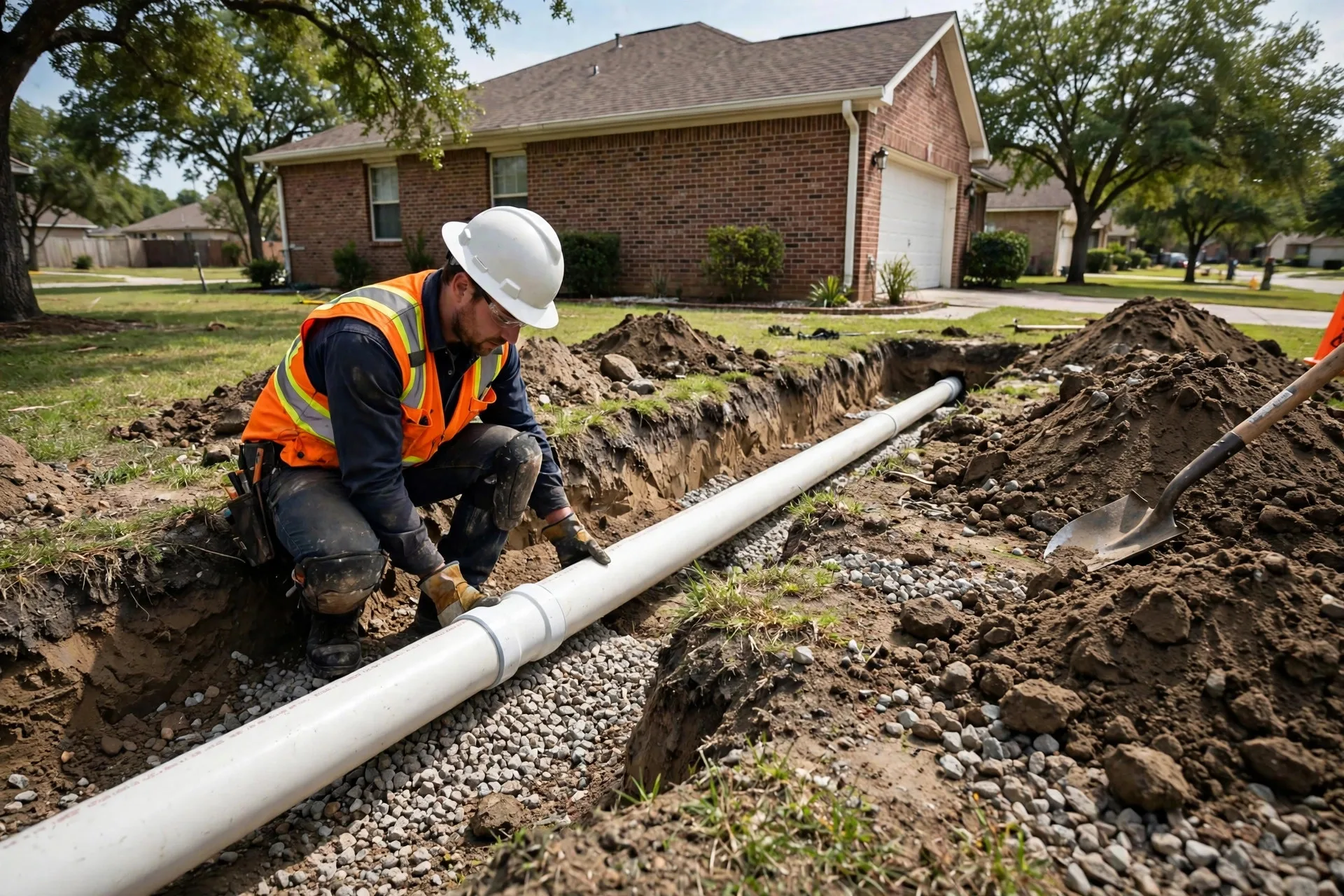
Pipe age, lake lots, and access constraints
Pipe age in Rockwall cuts both ways, and the housing numbers explain why. The median build year here is 2003, with about 62 percent of homes built in 2000 or later, which means much of the city runs newer pipe that fails at joints and bellies rather than by wall collapse. Those newer lines are often good trenchless candidates when they fail, because the wall itself is sound and the problem is joint gaps, root entry, or a cracked section. Homes built before 1990 make up about 23 percent of the city, and pre-1980 homes about 7 percent, and those older homes often still carry cast iron. Cast iron fails from the inside, scaling closed year by year, and a heavily scaled cast iron line leaves little bore for a liner to work with. The camera shows that bore plainly, and when the bore is gone, lining is not the answer even though the pipe is still round. Age alone never decides a trenchless job. The bore on camera decides it, and age tells us what to look for before the camera goes in.
Lake lots add access constraints that change trenchless planning more than any other factor in Rockwall. Chandlers Landing carries lakefront homes where mature trees and older sections meet newer builds, and the laterals there often run long, under beds and walks, with limited room for equipment at the access points. A long lateral is not a problem for lining in itself, but it means more bends, more branches, and more places where the camera map has to be exact before the liner travels. The Shores runs the same pattern, with long runs from house to street that give roots more joints to enter and give bellies more length to form, and with lake side ground that stays wetter longer, so the clay cycle there runs on a different rhythm than the drier inland streets. The Harbor District sits close to the water too, where wet ground and tight lots can leave one access point easy and the other squeezed between a structure and a slope, and a trenchless job with only one good access point needs a different plan than the same job on an open lot. We walk every access point before we quote a trenchless method, because a method that fits the pipe but not the lot is not a method that fits the job. That lot walk is a standing part of trenchless sewer repair Rockwall TX planning on lake lots, where the access question is often harder than the pipe question.
Access constraints also include what sits above the line. A run under a drive, a patio, or a mature bed is exactly where trenchless earns its keep, because the alternative is cutting that surface open. A run under open grass with a belly is exactly where digging earns its keep, because the surface is cheap to restore and the grade needs correcting. A run that passes close to other buried lines needs care whichever method is chosen, and bursting needs the most care of all, because it displaces soil around the old pipe. We do not guess at what is buried near the line. We ask, we look, and we plan the access points around what we find. That site walk is part of the trenchless job, not an extra, and it is the reason two houses with the same pipe problem can get different recommendations.
For the town-by-town ground stories, see drain cleaning in Rowlett and drain cleaning in Wylie.

What trenchless cannot fix
Trenchless work has a clear edge, and this section is that edge, stated without softening. A collapsed pipe cannot be lined, because a liner needs a round host to press against, and a collapsed section has no round host left. It usually cannot be burst either, because a bursting head needs a path to follow, and a fully collapsed section gives it none. A severe belly cannot be lined or burst into a good drain, because both methods preserve the grade they start with, and a belly is a grade failure. A pipe that has lost its shape along a long stretch, gone oval or flattened, will not come back round because a liner was cured inside it. The finished bore will be the flattened bore, and the house will still drain poorly. In each of those cases, the honest fix is to open the ground at the failed section and replace that pipe at the correct grade, which is the work described on the sewer line replacement page. We link to that page rather than repeating it here, because replacement deserves its own full explanation, and because a trenchless page that pretends to cover replacement is doing neither topic justice.
There are smaller limits worth naming too. A line with a sharp bend that the liner cannot navigate cleanly, a run with a branch connection in a place the camera cannot guide a reopening tool to, or a section where the old pipe diameter changes abruptly may all push a job from lining toward bursting or toward digging. A line that is still actively shifting, with joints opening between inspections, may need the ground and the bedding addressed in a way trenchless methods do not address. None of those limits is a failure of the homeowner or the house. They are the normal boundaries of a method, and knowing them before the job is what separates a trenchless specialist from a crew that sells trenchless for every line it sees. If your line sits outside those boundaries, we will tell you, show you the footage that proves it, and talk about the replacement section that actually fixes it. That conversation costs you nothing but the inspection, and it saves you from paying for a renewal that cannot hold.
Access points and your yard: what gets dug and what does not
Access points are the whole disturbance of a trenchless job, so it is worth saying exactly what they are. An access point is a pit dug at the end of the run being renewed, big enough for the crew and the equipment to work the liner or the bursting head into the line. On many Rockwall homes, one access point is the existing cleanout, a capped pipe near the house wall or in the yard, and the other is a pit dug where the line meets sound pipe or the street connection. On other homes, both ends need a pit, because the cleanout sits in the wrong place for the run or is too small for the equipment. We mark those points on the ground with you before digging, so there is no surprise about which bed, which stretch of grass, or which corner of a walk is involved.
What does not get dug is the run itself. The grass between the access points stays in place, the beds along the run stay planted, and the walk or drive over the run stays intact, unless the camera shows a defect in that stretch that needs a trenched repair on its own. Spoil from the access pits is kept beside the pits, not spread along the run, and the pits are backfilled and compacted when the job is done. Restoration of an access point is a patch, not a regrading, and we leave it level and ready for grass to take it back. If a pit lands in a bed, we say so before the job and we put the planting back as close as we found it, because a bed is not a spoil heap and treating it like one is how a good pipe job turns into a bad yard story.
Inside the house, the disturbance is water, not digging. Fixtures on the renewed line stay off while the liner cures or while the bursting pull runs, and the crew gives you that window before the work starts so the house can plan around it. Other lines in the house that do not join the renewed run are unaffected, and we say which fixtures are on the renewed line and which are not, because a house with two laterals does not need the whole house shut down for one run. When the job is done, we run water through every fixture on the renewed line and watch it drain, and we camera the finished run and show you that footage. The yard shows two patches. The camera shows a new pipe. That is the whole footprint of a trenchless job, stated before you agree to it rather than discovered after, and it is the footprint a homeowner weighing trenchless sewer repair Rockwall TX options should be quoted before any work starts.
More questions are answered on the drain and sewer FAQs page.
Does trenchless sewer repair work on cast iron pipes?
It can, when the cast iron still holds its round shape and enough bore after cleaning. Heavily scaled cast iron that has closed up from the inside leaves too little bore for a liner, and that is a camera judgment, not a guess from the age of the house. When the bore is sound, lining seals the joints and cracks that let roots in. When the bore is gone, replacement of that section is the honest fix.
How do I know if my line qualifies for lining or bursting?
The camera decides, and you see the footage. A line that holds its round shape and its downhill grade, with damage limited to cracks, joints, and root entry, usually qualifies for lining. Damage spread along the length with a sound alignment points toward bursting. Collapse, lost shape, or a deep belly points away from trenchless entirely, toward a trenched replacement of the failed section.
Will trenchless repair fix a belly in my sewer line?
No, and any crew that says otherwise is overselling the method. Lining a belly gives you a smooth belly that still holds water, and bursting a belly gives you a new pipe that sags in the same place. A belly is a grade failure, and grade is fixed by opening the ground at that section and resetting the pipe at the right fall.
How much of my yard gets dug up for a trenchless job?
The access points only, usually one or two pits at the ends of the run, plus the existing cleanout where it can serve as an entry. The run itself between those points is not trenched, so grass, beds, walks, and drives over the run stay in place. The pits are backfilled, compacted, and left level when the job is done.
What happens to the branch lines that join the main during lining?
The liner covers them during installation, and then we reopen each one from inside the lined run with a camera guided tool, so every branch drains into the new lined pipe again. We camera the finished run to confirm each reopened branch is open and clean. A lined main with a sealed branch is not a finished job, and we check for it before we leave.
Is trenchless always better than digging a trench?
No. Trenchless is better when the line qualifies and the ground above it is worth preserving, like a drive, a patio, or a mature bed. Digging is better when the line has lost shape or grade, when a belly needs regrading, or when the run sits under open ground that is cheap to restore. The camera footage and a walk of your lot decide which one fits your house, not a general claim about either method.
Related Services
One trade, seven services. Every service below is drain and sewer only.
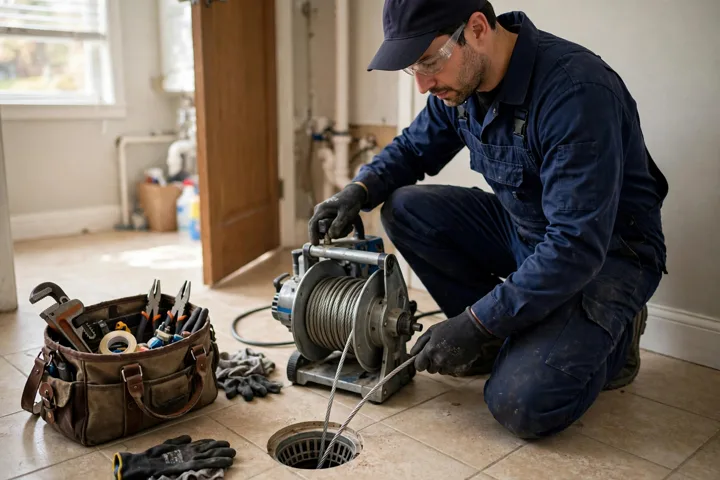
Drain Cleaning
Snaking and clearing for sinks, tubs, toilets, and main lines, with the cause found, not guessed.
Learn more
Emergency Drain Service
Backups and sewage overflows answered fast, with a crew that shows up ready.
Learn more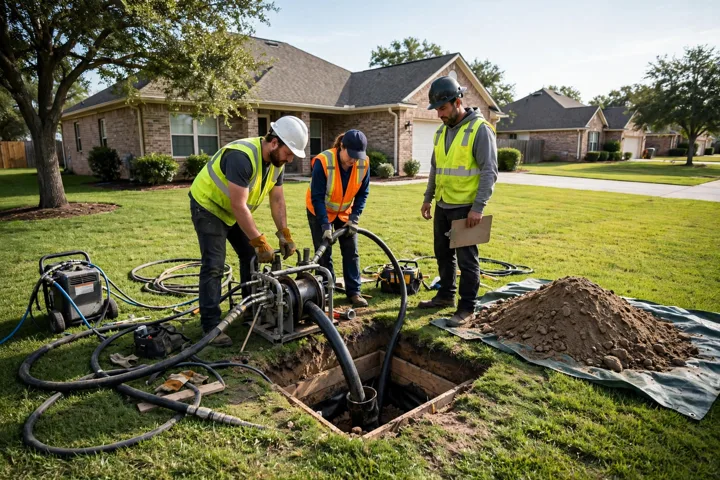
Sewer Line Repair
Spot repairs and section fixes, located by camera first, so we open only what must be opened.
Learn more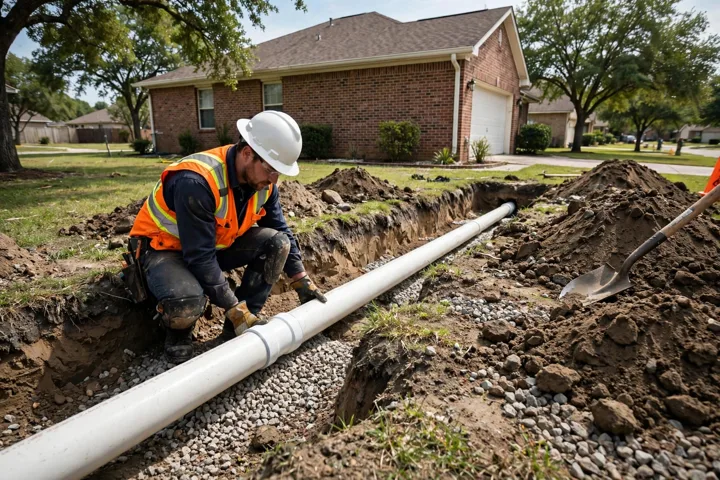
Sewer Line Replacement
Full line replacement in clay and cast iron country, bedded and graded to drain properly.
Learn more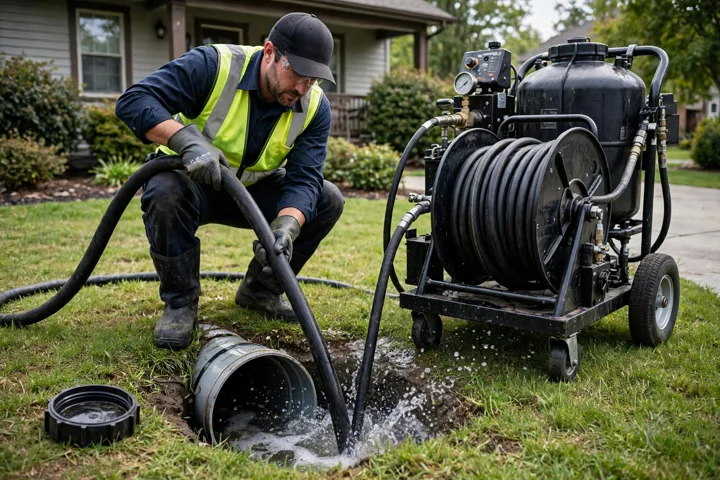
Hydro Jetting
High pressure water scouring that strips grease, scale, and roots back to a clean pipe wall.
Learn more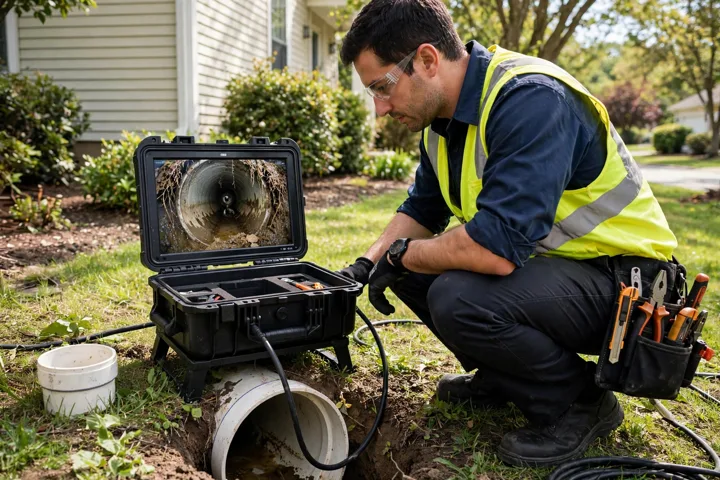
Sewer Camera Inspection
A recorded look inside the line: roots, cracks, bellies, and offsets, shown to you on screen.
Learn moreKeep Reading
Related pages worth opening next, with the ground detail that belongs to each one.
Rowlett
Drain and sewer service for Rowlett homes, from a crew that serves the Rockwall lake footprint.
Learn moreWylie
Drain and sewer service for Wylie homes, from a crew that serves the Rockwall lake footprint.
Learn moreDrain and Sewer Cost Guide
What drives the price of drain cleaning, repair, replacement, trenchless, jetting, and camera work, no guesswork.
Learn moreDrain and Sewer FAQs
Straight answers to the questions Rockwall homeowners actually ask us, in plain language.
Learn moreIndustry reference: NASSCO, the underground infrastructure industry association, publishes the technical resources and standards behind trenchless assessment and rehabilitation work. NASSCO.